How many types of trans people are there?
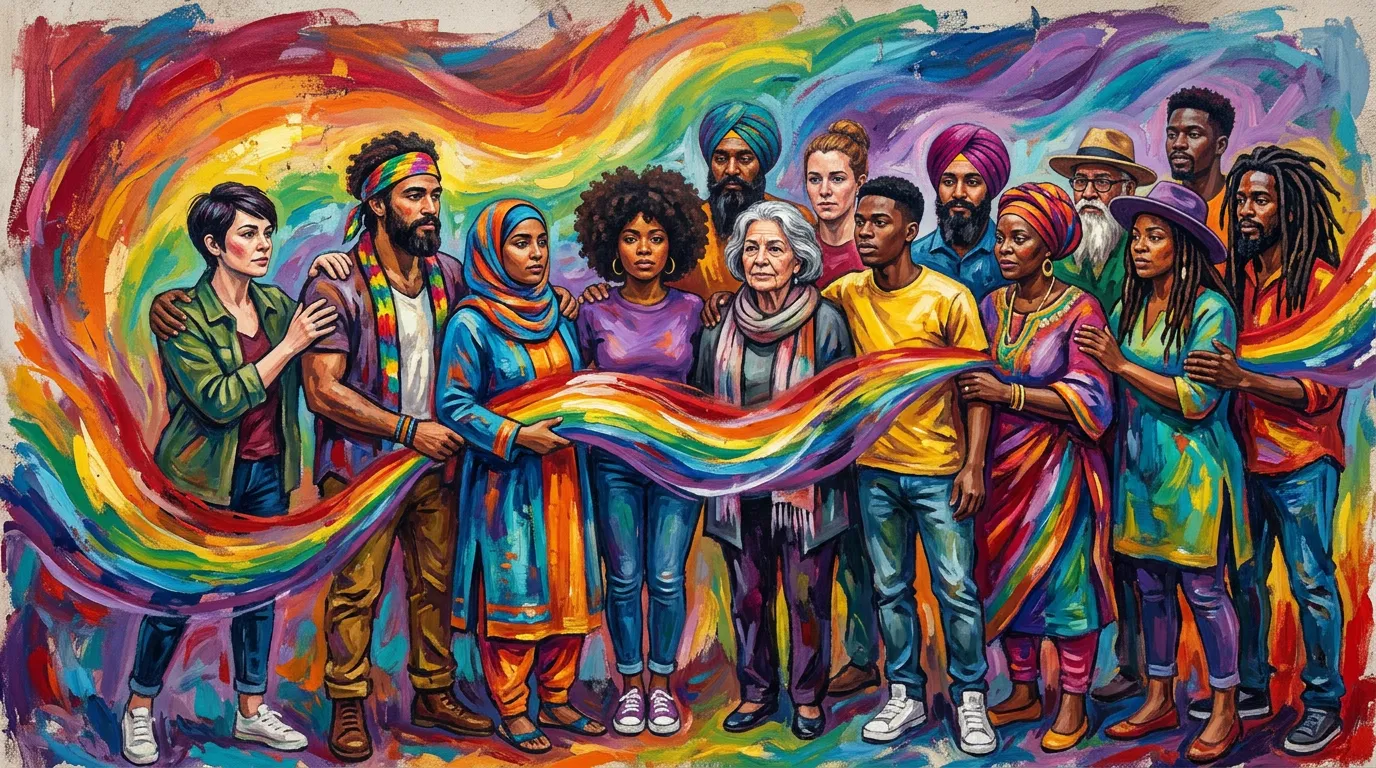
The trans experience is not monolithic. Behind the word “transgender” exists a broad spectrum of identities, experiences, and life paths. There are no rigid “types” with clear boundaries, but a variety of ways in which people live their gender identity when it does not correspond to the sex assigned at birth [1][2].
Trans women
A trans woman (also called a transgender woman, or in medical contexts an MtF person — male-to-female) is a person who was assigned male at birth but who identifies and lives as a woman [1][3].
Trans women may take different paths. Some choose hormone therapy with estrogens, which modifies body fat distribution, reduces hair growth, and develops breasts. Some choose surgical procedures such as vaginoplasty or facial feminization surgery. Others live their identity without any medical intervention [2].
In Italy, trans women can obtain the rectification of their documents with the female name and gender through Law 164/1982. In the United States and other countries, legal recognition processes vary by jurisdiction.
Trans men
A trans man (or transgender man, FtM person — female-to-male) is a person who was assigned female at birth but who identifies and lives as a man [1][3].
Hormone therapy with testosterone produces voice deepening, beard growth, body fat redistribution, and increased muscle mass. Surgical procedures may include mastectomy (chest surgery), hysterectomy, and genital reconstruction procedures such as phalloplasty or metoidioplasty [2].
Trans men are often less visible in public discourse than trans women, but their experiences and challenges are equally significant.
Non-binary people
Non-binary people are people whose gender identity does not fall within the binary man/woman distinction [1][6]. This is an umbrella term that encompasses diverse experiences:
Genderqueer: a term used by people who reject traditional gender categories or position themselves outside of them. It may overlap with “non-binary” but also has a more political connotation [6].
Genderfluid: describes people whose gender identity is not fixed but changes over time. A genderfluid person may feel like a woman at certain times, a man at others, or somewhere in between [6].
Agender: people who do not identify with any gender or feel they do not have a gender. Some agender people also describe themselves as “gender neutral” or “neutrois” [6].
Bigender: people who identify with two genders, often (but not necessarily) male and female, simultaneously or alternately [6].
Demigender: people who partially identify with a gender. A demigirl, for example, partly identifies as a woman and partly as something else [6].
Non-binary people represent a significant portion of the trans community. According to a 2023 Trevor Project survey, about one quarter of LGBTQ+ youth in the United States identifies as non-binary [5]. In Europe and elsewhere, precise statistics are lacking, but the growing visibility of these identities is evident.
Non-binary people may use different pronouns. In English, many use they/them, while others use he/him, she/her, neopronouns, or a combination. There is no single correct answer — the important thing is to ask and respect each person’s preference.
Intersex people and trans people
It is important to distinguish between trans people and intersex people, even though the two experiences can overlap [1].
Intersex people are born with sexual characteristics (chromosomal, hormonal, or anatomical) that do not fit within the typical definitions of male or female. Being intersex concerns the body, not gender identity. An intersex person may identify as cisgender, transgender, or non-binary.
Some people are both intersex and trans, but the two conditions are distinct and should not be confused.
Terminology: transgender, transsexual, and other words
Language has evolved over time, and the terms used to describe trans people reflect this evolution [7].
Transgender (or trans) is the most widely used and accepted term today. It is an adjective — one says “trans person” or “trans woman,” not “a transgender” [7].
Transsexual is an older term, coined in a medical context. Historically, it referred to people who had undertaken or desired medical transition. Today it is considered outdated by many trans people, although some continue to use it to describe themselves [1][7].
Cross-dresser describes people who wear clothing typically associated with another gender, without necessarily having a gender identity different from the assigned sex. Cross-dressing is not the same as being trans [1].
Drag queen and drag king are performers who exaggerate gender characteristics for artistic purposes. Doing drag does not imply being trans, although some trans people perform in drag [7].
Cisgender is the term that describes people whose gender identity corresponds to the sex assigned at birth. It is not an insult: it is simply the counterpart of “transgender,” just as “heterosexual” is the counterpart of “homosexual” [1].
Every path is different
One of the most common errors is thinking that there is a “right” way to be trans. The reality is that trans experiences are extremely varied [2][4]:
- Some trans people know from childhood; others become aware in adulthood.
- Some trans people choose a complete medical transition; others only partial; still others none at all.
- Some trans people live in a binary way (as men or as women); others position themselves outside the binary.
- Some trans people experience intense gender dysphoria; others primarily experience gender euphoria when recognized in the correct gender.
None of these variations is “more trans” or “less trans” than the others. A person’s gender identity is valid regardless of the path they choose to take [2].
The numbers
The trans population is more numerous than many imagine. According to the Pew Research Center, about 5% of young adults in the United States report having a gender identity different from the sex assigned at birth [4]. In Europe, a survey by the FRA (European Union Agency for Fundamental Rights) found that trans and non-binary people are present in every EU country, with growing percentages among younger generations [8].
This growth does not indicate “contagion” or a trend, but reflects greater awareness and social contexts that allow more people to express their identity without fear of retaliation.
Conclusion
There are no rigid “types” of trans people, but a spectrum of identities and paths. Trans women, trans men, non-binary people, genderfluid, agender — each of these experiences is a legitimate way of living one’s gender identity. What they share is a discrepancy between the sex assigned at birth and the deep sense of who one is.
Recognizing this diversity does not complicate the understanding of the trans experience: it enriches it. And remembering that behind every label there is a person with a unique story is the first step toward respectful dialogue.
Frequently asked questions
How many types of trans people are there?
The main trans identities include trans women, trans men, and non-binary people. Within these categories, there are many nuances: genderqueer, genderfluid, agender, bigender, and others. These are not rigid categories but a spectrum of experiences.
What is the difference between a trans woman and a trans man?
A trans woman is a person who was assigned male at birth but identifies as a woman. A trans man is a person who was assigned female at birth but identifies as a man.
What does non-binary mean?
Non-binary is an umbrella term for people whose gender identity does not fall within the man/woman distinction. Some non-binary people feel a combination of both genders, others identify with neither, and still others have a gender identity that changes over time.
Are transgender and transsexual the same thing?
No. Transgender is the broader term and refers to anyone whose gender identity differs from the sex assigned at birth. Transsexual is an older term, historically used to refer to people who have undergone or desire medical transition. Today, many people prefer transgender or simply trans.