Transgender History by Susan Stryker: The History They Didn't Tell Us
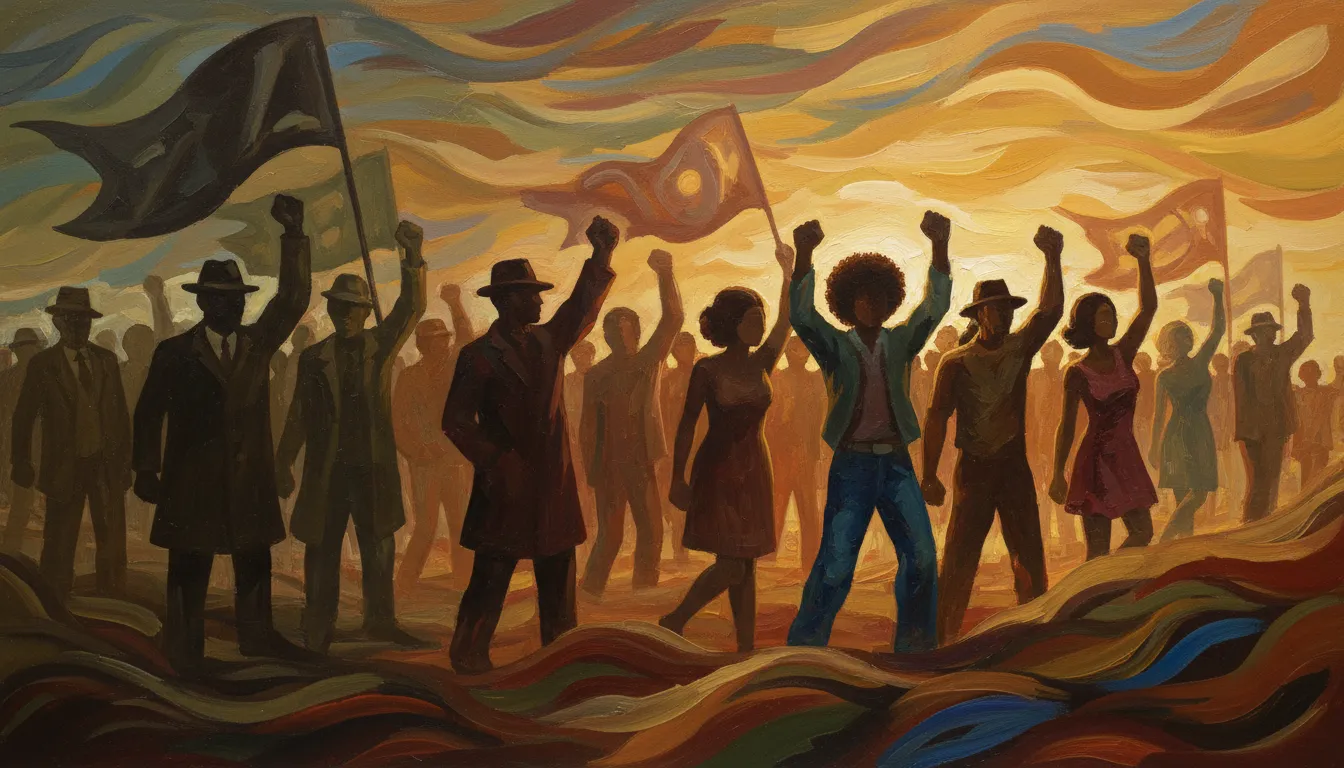
The histories of trans people have always existed, but for a long time they have been erased, ignored, or distorted. Traditional historiography has treated transgender people as marginal anomalies, clinical cases, or exotic curiosities, denying them the status of historical subjects with their own political and cultural agency. Susan Stryker, with Transgender History, wrote the book that was missing: a rigorous, accessible, and politically conscious historical narrative of the trans movement in the United States, from the 19th century to the present day [1].
First published in 2008 and updated in a second edition in 2017 with the subtitle The Roots of Today’s Revolution [1], the book has become the reference text for anyone wanting to understand how trans people have fought, resisted, and built communities despite centuries of oppression [6].
Who is Susan Stryker
Susan Stryker is an American transgender historian, filmmaker, theorist, and activist. She earned her PhD in United States History from the University of California, Berkeley, and currently teaches at the School of Geography, Development & Environment at the University of Arizona [2]. She is considered one of the founders of transgender studies as an autonomous academic discipline [4].
Her work ranges from historical research to cultural production. In 2005, she directed the documentary Screaming Queens: The Riot at Compton’s Cafeteria [3], which chronicles the riot by trans women at Compton’s Cafeteria in San Francisco in 1966—an event that preceded Stonewall by three years and was long forgotten. In 2006, she co-edited, alongside Stephen Whittle, The Transgender Studies Reader, an anthology of foundational texts that helped define the field of transgender studies as an academic discipline [4].
Stryker is a trans woman who has lived firsthand many of the political and cultural transformations she describes in her work. This positionality—as both a scholar and a historical subject simultaneously—gives her writing a depth that few academic texts achieve.
The Structure of the Book
Transgender History is organized chronologically, but it is not a simple timeline. Stryker weaves together events, analyses, and personal portraits to construct a narrative that is at once social history, political history, and cultural history [1]. The book is divided into periods corresponding to distinct phases of the American trans movement.
Before the Movement: The 19th Century and the First Classifications
The book opens with an analysis of the period preceding the birth of an organized movement. Stryker explores how gender categories were understood in the 19th century and how the early sexological classifications—those of Richard von Krafft-Ebing, Magnus Hirschfeld, and Havelock Ellis—began to create a language to describe the experiences of people who did not conform to gender expectations [1].
Stryker pays particular attention to the work of Magnus Hirschfeld and his Institut für Sexualwissenschaft (Institute for Sexual Research) in Berlin (1919-1933), the world’s first clinic to offer medical services to trans people [7]. The destruction of the Institute by the Nazis in 1933 is presented not only as a cultural tragedy but as a deliberate act of historical erasure that delayed the understanding and acceptance of trans identities by decades [7].
The 1950s and 1960s: Christine Jorgensen and Visibility
A central chapter is dedicated to the period from the end of World War II to the late 1960s. The case of Christine Jorgensen, the American trans woman who became a media celebrity in 1952 after her trip to Denmark for her transition, is analyzed as a foundational moment of modern trans visibility [1].
But Stryker goes beyond the single famous case. She reconstructs the social fabric of trans communities in the 1950s and 1960s: the bars, the clubs, the informal support networks that existed in major American cities. She tells the story of lesser-known but equally important figures, such as Virginia Prince, who in 1960 founded Transvestia, one of the first publications dedicated to people we would today define as transgender, and who in 1962 created the Foundation for Personality Expression (FPE), one of the first organizations for gender non-conforming people [1].
The Compton’s Cafeteria Riot (1966)
One of Stryker’s most significant historiographical contributions concerns the Compton’s Cafeteria riot, which occurred in August 1966 in the Tenderloin district of San Francisco [3]. When the police attempted to arrest a group of trans women and drag queens in the diner, the patrons fought back: tables were overturned, plates were thrown, and windows were smashed. The riot spilled into the surrounding streets and continued the following night.
The event preceded the Stonewall riots by three years, but it had been almost entirely forgotten by historiography. Stryker, through her documentary Screaming Queens (2005) [3] and the dedicated chapter in Transgender History, restored this event to its rightful place in the history of the movement. The Compton’s riot demonstrates that organized trans resistance did not emerge spontaneously at Stonewall, but had deeper roots.
Stonewall and Its Aftermath (1969-1979)
Stryker devotes ample space to the Stonewall riots of June 1969 and, above all, to what happened afterward. She recounts the fundamental role of figures like Marsha P. Johnson and Sylvia Rivera, the founding of STAR (Street Transvestite Action Revolutionaries), and the progressive marginalization of trans people within the nascent gay and lesbian liberation movement [1].
One of the most important aspects of Stryker’s analysis concerns precisely this marginalization. Trans people—particularly trans women of color—were among the protagonists of the Stonewall riots, but they were systematically excluded from the organizations that arose from those riots. The Gay Liberation Front and the Gay Activists Alliance prioritized the demands of cisgender white gay men, and trans people found themselves having to fight on two fronts: against heteronormative society and against exclusion within their own community [1].
The Contemporary Movement (1980-2017)
The second part of the book covers the period from the 1980s to the second half of the 2010s. Stryker analyzes the emergence of transgender studies as an academic discipline, starting with the foundational essay by Sandy Stone, The Empire Strikes Back: A Posttranssexual Manifesto (1991) [5], which responded to the attacks of trans-exclusionary feminism and proposed a new conception of trans subjectivity.
The book also traces the history of legal battles for the recognition of trans rights: anti-discrimination laws, civil rights rulings, and controversies over trans people’s participation in the military [1]. Stryker does not hide the internal tensions within the movement—between transsexual and transgender people, between assimilationist and radical activists, between different generations—but presents them as part of a vital political dialectic.
The Second Edition: The Era of Visibility and Backlash
The second edition of 2017 adds significant material on the 2008-2016 period, which Stryker defines as the era of “transgender visibility” [1]. The book analyzes the Transgender Tipping Point declared by TIME Magazine in 2014, the growing presence of trans people in the media and popular culture, and at the same time the intensification of the conservative backlash, with hundreds of anti-trans bills introduced in American state legislatures.
Stryker is careful not to confuse visibility with progress. The increased visibility of trans people has produced both a normalization of trans identities in public perception and a violent backlash from those who view the recognition of trans people as a threat to the traditional social order. This ambivalence—visibility as an achievement and as exposure—is one of the central themes of the second edition [1].
The Contribution to Historiography
Transgender History has had a significant impact on historiography for at least three reasons [6].
The first is methodological: Stryker demonstrates that it is possible to write a history of trans people that does not treat them as objects of study, but as historical subjects endowed with political agency [4]. The trans people in Transgender History are not patients, clinical cases, or passive victims: they are activists, organizers, thinkers, and fighters.
The second is substantive: the book brought to light events and figures that had been forgotten or marginalized. The Compton’s Cafeteria riot [3], the trans organizations of the 1950s, the tensions between the gay movement and the trans movement—all these histories were known only to specialists before Stryker made them accessible to a broad audience.
The third is its disciplinary positioning: Transgender History helped legitimize transgender studies as an autonomous academic field, distinct from gay and lesbian studies and traditional gender studies, while maintaining a constant dialogue with them [4].
A Text for the Present
Reading Transgender History today, in a context where the rights of trans people are under attack in many countries, is not an exercise in nostalgia. It is a political act. The book demonstrates that the trans movement has a long, complex history rich with lessons for the present [1].
The history told by Stryker shows that moments of greater visibility have always been accompanied by violent backlash. It shows that alliances between different movements—feminist, gay, trans, anti-racist—are as necessary as they are fragile. It shows that trans people are not a recent phenomenon, a fad, or a trend: they are an integral part of human history, with a tradition of resistance that predates any contemporary label.
For those approaching the history of trans people for the first time, Transgender History is the ideal starting point: rigorous without being overly academic, accessible without being simplistic, engaged without being dogmatic [6]. For those who already know this history, it is a reminder of how long the journey has been and how much remains to be done.
Frequently asked questions
What is Transgender History by Susan Stryker about?
Transgender History traces the history of the trans movement in the United States from the 19th century to today. It covers the earliest organizations, the Compton's Cafeteria and Stonewall riots, the birth of academic transgender studies, and contemporary legal and political battles.
Who is Susan Stryker?
Susan Stryker is an American transgender historian, filmmaker, and theorist. A professor at the University of Arizona, she is one of the founders of transgender studies as an academic discipline. She directed the documentary Screaming Queens and co-edited the Transgender Studies Reader.
Why is Transgender History a foundational text?
It is considered the most comprehensive and accessible introductory text on the history of the trans movement. It combines academic rigor with readability, and is used in hundreds of university courses in the English-speaking world. The second edition (2017) updates the narrative up to the Trump era.
Is there an Italian translation of Transgender History?
As of 2026, Transgender History has not been translated into Italian. The text is available in English in its second edition (2017), published by Seal Press with the subtitle The Roots of Today's Revolution.
Further reading
- documentary Screaming Queens: The Riot at Compton's Cafeteria (2005)
- book Whipping Girl (2007)
- documentary Disclosure: Trans Lives on Screen (2020)