Marsha P. Johnson: icon of trans activism
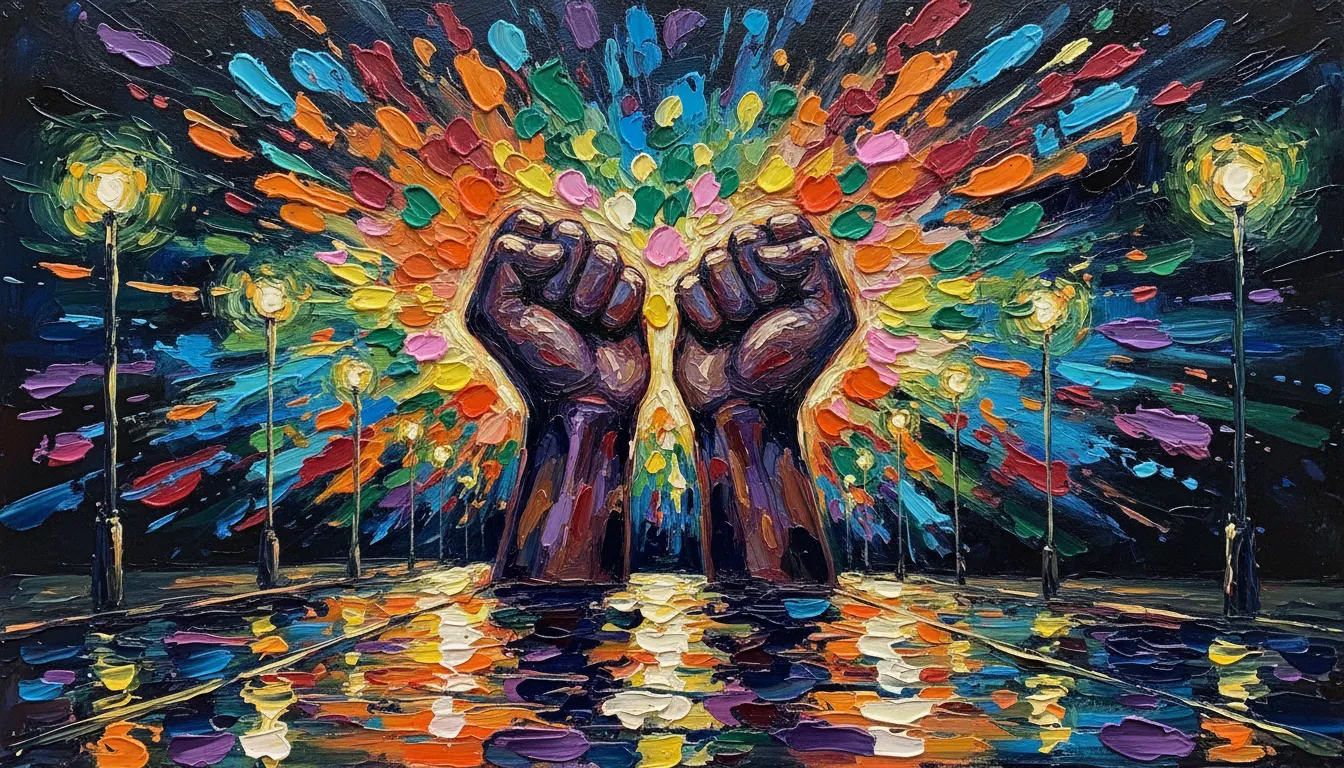
Marsha P. Johnson was one of the most iconic and influential figures in the history of the LGBTQ+ rights movement. A tireless activist, performer, and mentor, she dedicated her life to fighting for the rights of the most marginalized people within the LGBTQ+ community, leaving a legacy that continues to inspire generations of activists.
Early years
Born on August 24, 1945, in Elizabeth, New Jersey, as Malcolm Michaels Jr., Marsha grew up in a working-class African American family [1]. From childhood, she expressed a gender-nonconforming identity: at age five she wore dresses, but stopped after being molested by an older boy in the neighborhood [1].
After graduating from high school in 1963, Marsha moved to New York City with just $15 and a bag of clothes [1]. The city would become her home and the stage of her life as an activist and performer. It was in New York that she adopted the name “Marsha P. Johnson” — the surname taken from a Howard Johnson’s restaurant, and the “P” standing for “Pay It No Mind,” the answer she gave to anyone who questioned her gender [1][4].
Greenwich Village and life as a performer
In the 1960s, Marsha became a familiar figure in Greenwich Village, the bohemian Manhattan neighborhood that served as a haven for artists, writers, and members of the LGBTQ+ community [1]. She worked as a drag performer and sex worker to survive, a reality common to many trans people of the era who faced systematic discrimination in employment and housing.
Marsha was known for her eccentric and joyful style: she often wore crowns of fresh flowers, flamboyant outfits, and flashy jewelry [4]. Her charismatic presence and generous spirit made her a beloved figure in the community. Despite the hardships she faced — including episodes of violence, frequent arrests, and struggles with mental health — Marsha maintained a positive and compassionate attitude toward others.
Stonewall: a turning point
On the morning of June 28, 1969, police raided the Stonewall Inn, a gay bar in Greenwich Village [1]. These raids were common at the time, but that night something changed: the patrons of the bar decided to resist. What followed were six days of protests and clashes that marked a turning point in the fight for LGBTQ+ rights.
Marsha’s exact role in the Stonewall uprising has been the subject of debate. She herself recounted in an interview that she arrived around 2 in the morning, when the disturbances had already begun [1][4]. However, many witnesses remember her as one of the central figures of the resistance. Regardless of the precise moment of her arrival, it is undeniable that Marsha was an active participant in the protests and that Stonewall served as a catalyzing moment for her activism.
STAR: a revolution for the most vulnerable
In 1970, Marsha and her close friend and fellow activist Sylvia Rivera founded STAR (Street Transvestite Action Revolutionaries), an organization dedicated to helping homeless LGBTQ+ youth, particularly trans people, drag queens, and sex workers [1].
STAR was not just an advocacy group — Marsha and Sylvia literally opened their homes. The STAR House, located in an abandoned building in the East Village, provided free housing to young LGBTQ+ people who had been thrown out of their homes or were living on the streets [1]. Marsha and Sylvia gathered food, clothing, and money (often through sex work) to support the people living in the house.
This work was revolutionary. While the emerging gay rights movement of the 1970s tended to focus on issues of respectability and mainstream acceptance, Marsha and Sylvia kept the focus on the most marginalized people in the community. They fought not only for abstract rights but for the material and immediate needs of survival: food, shelter, safety.
Tensions within the movement
The work of Marsha and Sylvia often put them in conflict with more conservative sectors of the LGBTQ+ movement. During the first Pride rally in 1973, Sylvia was physically removed from the stage when she tried to speak about the situation of incarcerated trans people [1]. Marsha was at her side, supporting her as parts of the movement sought to exclude trans voices, particularly those of trans women of color.
These tensions reflected broader dynamics: the mainstream gay movement of the 1970s and 1980s often privileged white, middle-class gay men while marginalizing trans people, lesbians, and people of color. Marsha and Sylvia represented a more radical and inclusive vision of queer liberation, one that recognized how race, class, and gender identity intersected with sexual orientation.
AIDS activism
In the 1980s, when the AIDS epidemic devastated the LGBTQ+ community, Marsha joined ACT UP (AIDS Coalition to Unleash Power), an organization that used direct action and civil disobedience to combat government indifference toward the AIDS crisis [1][5].
Marsha participated in numerous demonstrations and protest actions, often risking arrest. Her activism during this period reflected her ethic of care: many of the people affected by AIDS were members of her community, friends, and fellow activists. Marsha visited sick people, raised funds for treatment, and used her voice to denounce institutional neglect.
A mysterious death
On July 6, 1992, Marsha’s body was found in the Hudson River, near the Christopher Street piers — the same neighborhood where she had lived and fought for decades [1][2]. She was 46 years old.
The New York police quickly classified her death as a suicide, but friends, activists, and community members were immediately suspicious [1][2]. Marsha had been in good spirits in the days before her death and had been planning future events. Furthermore, there were signs of trauma on her body that suggested violence.
The LGBTQ+ community and many activists have always believed that Marsha was murdered — possibly the victim of a transphobic hate crime. The police’s indifference in adequately investigating her death reflected a broader pattern of violence against trans people, particularly trans women of color, whose deaths were systematically ignored or minimized by authorities.
In 2012, under pressure from the community and after the production of a documentary about her life, the case was reopened and the classification changed from “suicide” to “death from suspicious causes” [2]. However, to this day, no one has ever been charged in connection with her death.
Legacy and remembrance
Despite the tragedy of her death, Marsha P. Johnson’s legacy continues to grow and inspire. In recent years, there has been a revival of interest in her life and work:
Cultural recognition: In 2017, Netflix produced “The Death and Life of Marsha P. Johnson,” a documentary that explores her life and the mysterious circumstances of her death [2]. The film brought her story to a global audience.
Physical memorials: In 2020, the East River State Park in Brooklyn was renamed Marsha P. Johnson State Park, making her the first openly LGBTQ+ person to have a New York state park named in her honor [3].
Art and activism: Her image has become iconic in contemporary LGBTQ+ and trans rights movements. Murals, artworks, and performances continue to celebrate her memory.
Continuation of the struggle: Modern organizations such as the Sylvia Rivera Law Project and the Marsha P. Johnson Institute continue the work that she and Sylvia began, focusing on justice for trans people of color and the fight against transphobic violence.
Lessons from her activism
What can we learn from Marsha P. Johnson today? Several lessons emerge from her life:
Concrete solidarity: Marsha did not merely talk about justice — she literally opened her home to those in need. Her activism was rooted in material acts of care and support.
Intersectionality before it had a name: Decades before the term “intersectionality” entered common parlance, Marsha lived and fought with the awareness that oppressions overlap. As a poor, Black trans woman, she understood that liberation had to address race, class, gender, and sexuality simultaneously.
Joy as resistance: Despite the immense difficulties she faced, Marsha maintained a joyful spirit [4]. Her flower crowns, her colorful outfits, her laughter — these were all acts of resistance against a world that sought to make trans people invisible and unhappy.
Centering the most marginalized: Marsha insisted that liberation must start with the most vulnerable. Her motto “Pay It No Mind” was not indifference but a refusal to allow hostile questions to define her humanity.
Conclusion
Marsha P. Johnson was not a saint — she was a real person with contradictions, struggles, and imperfections. She faced poverty, violence, mental health challenges, and systemic discrimination. But through all of this, she maintained an unwavering commitment to her community and a vision of a more just world.
Her life reminds us that progress in LGBTQ+ rights did not come through polite petitions or appeals to respectability, but through the courageous resistance of people willing to risk everything. It also reminds us that this progress remains incomplete: trans people, particularly trans women of color, continue to face alarming rates of violence, discrimination, and poverty.
Honoring the memory of Marsha P. Johnson means more than remembering her name. It means continuing the fight she began — for safe housing, for economic justice, for an end to violence, for a world where no trans person has to choose between authenticity and survival. It means, as she did, centering the most marginalized and building movements based on concrete solidarity and mutual care.
“Pay It No Mind” was not just a response to invasive questions — it was an invitation to look beyond rigid categories and embrace the full humanity of every person. This remains the challenge and the promise of her work.
Frequently asked questions
Who was Marsha P. Johnson?
Marsha P. Johnson (1945-1992) was an African American trans activist, performer, and key figure in the Stonewall uprising of 1969. She dedicated her life to the struggle for the rights of LGBTQ+ people, particularly the most vulnerable among them.
What does the P in Marsha P. Johnson stand for?
The P stood for 'Pay It No Mind,' the answer Marsha gave to anyone who asked about her gender. This phrase became emblematic of her approach to life and identity.
What was STAR and why was it important?
STAR (Street Transvestite Action Revolutionaries) was an organization founded by Marsha P. Johnson and Sylvia Rivera in 1970 to help homeless LGBTQ+ youth, particularly trans people and drag queens. It offered housing, support, and protection.
How did Marsha P. Johnson die?
Marsha was found dead in the Hudson River in July 1992. Her death was initially ruled a suicide, but the LGBTQ+ community always suspected foul play. In 2012, the case was reopened as a suspicious death.
Further reading
- documentary The Death and Life of Marsha P. Johnson (2017)
- documentary Pay It No Mind: Marsha P. Johnson (2012)
- Film Happy Birthday, Marsha! (2018)
- book The Stonewall Reader (2019)