Trans Rights Around the World: Who is Advancing and Who is Retreating
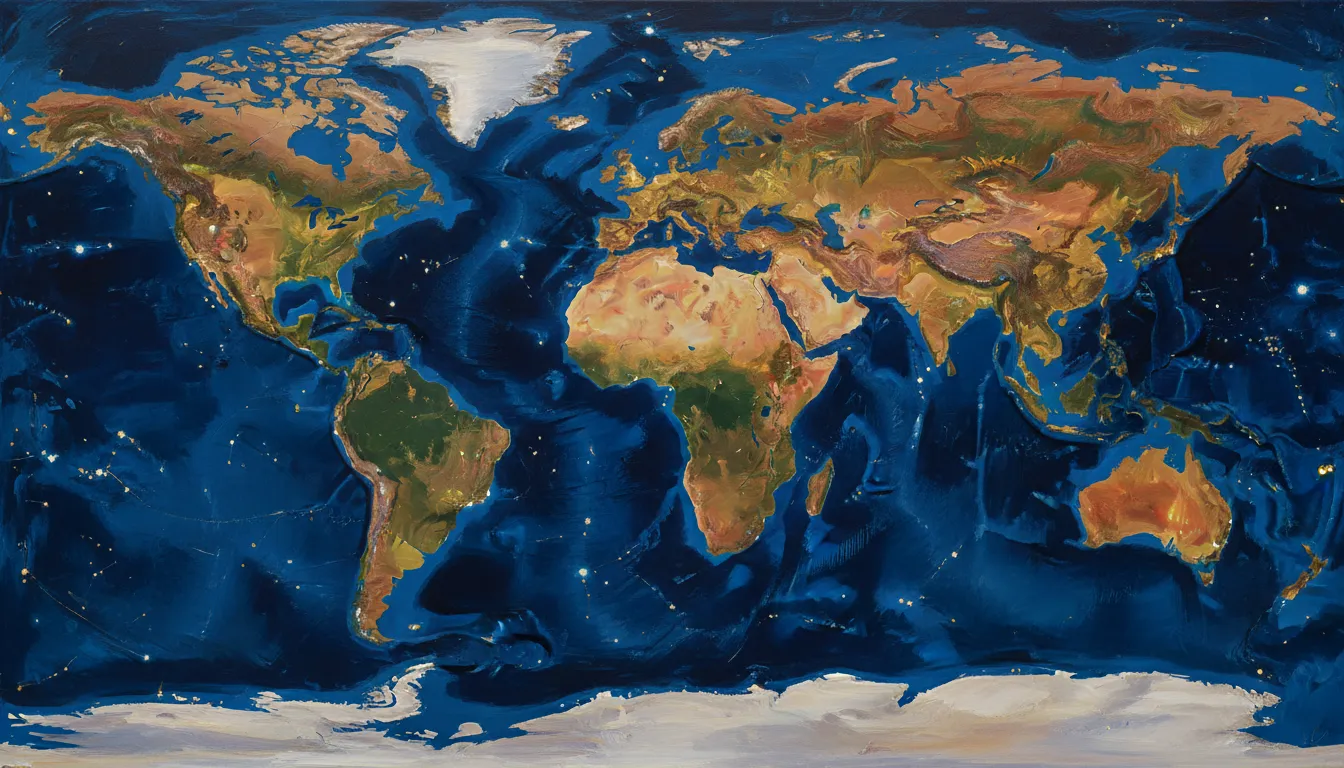
Here is the global map. 23 countries that recognize gender self-determination. 13 that directly criminalize trans existence. And in between, an archipelago of contradictions: states that proclaim rights on paper and deny them in practice, court rulings that dismantle walls, and parliaments that build new ones. Where we win. Where we lose. And where the boundary between victory and defeat depends on a zip code.
The Scoreboard: Self-Determination vs. Criminalization
The raw numbers tell a precise story. As of 2025, twenty-three countries worldwide allow trans people to change their gender marker on official documents through a simple declaration, without psychiatric diagnoses, without surgical interventions, and without committees deciding for you [1][2]. On the other side of the board, at least thirteen countries explicitly criminalize trans identity with laws that punish “cross-dressing,” “imitating the opposite sex,” or “impersonation”: Brunei, Gambia, Indonesia, Jordan, Kuwait, Lebanon, Malawi, Malaysia, Nigeria, Oman, South Sudan, Tonga, United Arab Emirates [3]. Many others do so indirectly, through laws on public morality, the natural order, or the “promotion” of non-conforming identities.
It is not a static ranking. It moves, every year, in both directions.
The Pioneers of Self-Determination
Argentina, 2012. The Ley de Identidad de Género (Law 26.743) was the first in the world to establish the pure principle of self-determination: no medical requirements, no diagnosis, no court. You declare who you are, the state registers it. Period. Fifteen years before the European debate, Buenos Aires had already settled the issue [2].
Denmark, 2014. First in Europe. A declaration model with a six-month reflection period. It paved the way for a domino effect across the continent.
Malta, 2015. Not just self-determination: the Gender Identity, Gender Expression and Sex Characteristics Act also banned non-consensual surgical interventions on intersex infants. A comprehensive package, unique in the world for its breadth.
Ireland, 2015. Gender Recognition Act: self-determination for adults over 18. The country that had decriminalized homosexuality only in 1993 found itself, twenty years later, at the forefront of trans rights.
Norway, 2016. Legal gender change available for anyone 16 and older, with parental consent from 6 to 16 years old. Without medical requirements.
Spain, March 2, 2023. The Ley Trans (Law 4/2023) made Spain the largest EU country with a gender self-determination law. Marker change starting at 16 without medical requirements, and from 14 to 16 with parental consent. The parliamentary process was fierce: 188 votes in favor, 150 against, 7 abstentions.
Finland, April 2023. The reform eliminated the sterilization and psychiatric diagnosis requirements that had been in place since 2003. The new law includes a 30-day reflection period and a minimum age of 18.
Germany, November 1, 2024. The Selbstbestimmungsgesetz (SBGG) replaced the Transsexuellengesetz of 1980, a law that required two independent psychiatric evaluations and a court decision. The numbers of the new system speak for themselves: in the first two months of effect (November-December 2024), 10,589 people changed their gender marker. In the ten months prior, under the old system, there had been 596 cases. The ratio is 18 to 1 [4]. No further comment needed.
The Countries That Criminalize
On the other side of the board, the situation is quite different. In Brunei, the Sharia Penal Code (which fully went into effect in 2019) mandates flogging for anyone who “dresses as a woman” [3]. In Oman, the law criminalizes anyone who “imitates the opposite sex in dress” [3]. In Malaysia, state Sharia laws punish cross-dressing with fines, imprisonment, and “rehabilitation” [3].
Uganda, May 2023. The Anti-Homosexuality Act introduced penalties of up to life imprisonment for “homosexuality” and the death penalty for “aggravated homosexuality.” It does not explicitly mention trans people, but it targets them directly: a trans woman attracted to men is automatically classified as “homosexual” by the law. The practical effect is the criminalization of the identity itself.
Mali, December 2024. The new Penal Code, adopted by the National Transition Council in October and entered into force on December 13, 2024, introduced Article 325-2, which criminalizes same-sex relations with penalties of up to seven years in prison. But it doesn’t stop there: anyone “perceived as supportive of homosexuality” is also punishable. Human Rights Watch documented an immediate surge in arbitrary arrests and violence based on physical appearance and gender expression [13].
Georgia, September 2024. The legislative package “On Family Values and the Protection of Minors,” approved 84 to 0 on September 17, 2024, banned gender transition, prohibited any modification of the gender marker on documents, and excluded trans people from adoption [18]. In 2025, an amendment to the Penal Code removed gender identity from the categories protected against discrimination. TGEU defined Georgia as an emblematic case of regression aligned with Kremlin policies [1].
Japan: The Courts’ Revolution
Japan offers the clearest case of how courts can dismantle an oppressive system piece by piece, even when Parliament does not move.
October 25, 2023. The Supreme Court, in a unanimous decision by all 15 judges of the Grand Bench, declared the mandatory sterilization requirement under the 2004 Gender Identity Disorder law unconstitutional. The ruling established that the surgical removal of reproductive organs as a condition for legal gender change is “highly invasive” and “excessively restrictive,” violating Article 13 of the Constitution (the right to the pursuit of happiness) [5].
January 2025. The Sapporo Family Court also declared unconstitutional the requirement mandating the modification of the appearance of genitals. Another piece of the wall falls [6].
September 2025. Another court eliminated the last key hurdle [6]. The legal architecture of the 2004 law has been hollowed out by jurisprudence, despite remaining formally in effect. The Japanese Parliament has not yet legislated, but the courts have rewritten the rules.
India: The Betrayed Promise
April 15, 2014. The Supreme Court’s NALSA v. Union of India ruling recognized the third gender and enshrined the right to self-determination of gender identity as a fundamental right [7]. A historic decision, celebrated worldwide.
2019. Parliament passed the Transgender Persons (Protection of Rights) Act. On paper, a law of protection. In practice, a systematic betrayal of the NALSA ruling. Section 4 declares the right to a self-perceived gender identity, but Sections 5 and 6 require a certificate issued by the District Magistrate. Section 7 requires proof of surgery to obtain recognition as male or female [8]. Human Rights Watch called the law “a step backward” from the Supreme Court’s ruling. Scholars have highlighted how the legislative text bureaucratizes and medicalizes a right that the Court had enshrined as absolute and self-determined [8].
The result: a country where the Supreme Court says one thing and Parliament does another. Rights on paper, bureaucracy in practice.
Brazil: Advanced Laws, Lethal Violence
Brazil embodies the most brutal contradiction on the global map.
2018. The Supreme Federal Court (STF) ruled that changing one’s name and gender on documents can be done by simple self-declaration, without surgical interventions or judicial authorization.
2019. The STF also equated transphobia with racism: a crime punishable by 2 to 5 years in prison.
Yet, Brazil remains the deadliest country in the world for trans people. Data from the National Association of Travestis and Transsexuals (ANTRA) speaks clearly: in 2023, at least 145 trans people were murdered in the country, one every three days. 88% of the victims were Black or mixed-race. 80% were under 35 years old. Most were sex workers from impoverished communities. The risk of murder for a trans person or travesti in Brazil is 19 times higher than for a gay or lesbian person [9].
Some scholars have described this situation as a genocide. The laws are there. The protection is not. Brazil proves that rights written on paper are not enough if society does not change, if law enforcement does not protect, and if poverty and racism multiply vulnerability.
Thailand: Halfway There
January 22, 2025. Thailand became the first country in Southeast Asia to legalize same-sex marriage, with a law that replaced the terms “man and woman” and “husband and wife” with “individuals” and “spouses” in the Civil and Commercial Code [14].
But the same Thailand that celebrates marriage equality has no law on the legal recognition of gender identity. On February 21, 2024, the House of Representatives rejected the Gender Recognition Bill with 257 votes against and 154 in favor. The justifications: recognizing genders other than male and female “would contradict Islamic teaching” and “could facilitate fraud.” A country with a highly visible trans culture—the kathoey, celebrated in tourism and entertainment—but without legal rights.
The WHO and the International Framework
May 25, 2019. The World Health Assembly adopted the ICD-11, the eleventh revision of the International Classification of Diseases. Gender incongruence was removed from the chapter on “Mental and behavioural disorders” (Chapter 6) and relocated to the new Chapter 17, “Conditions related to sexual health” [15]. The classification went into effect on January 1, 2022. It is no longer a mental illness. It is a health condition that may require medical care.
July 7, 2025. The United Nations Human Rights Council renewed the mandate of the Independent Expert on protection against violence and discrimination based on sexual orientation and gender identity (SOGI) for another three years, with 29 votes in favor, 15 against, and 3 abstentions [16]. The mandate, currently held by South African scholar Graeme Reid, was supported by 1,259 organizations from 157 countries. The resolution was presented by a group of six Latin American countries: Brazil, Chile, Colombia, Costa Rica, Mexico, and Uruguay [16].
2025-2026: The Victories
In a landscape of growing polarization, some victories stand out.
Cuba, July 2025. The new Civil Registry Law eliminated the surgery requirement for changing the gender marker on identity documents. Since 2008, the change was legal but required four documents attesting to medical treatments and genital surgery. The 2025 reform allows the change based on self-perceived gender identity, without surgery or judicial intervention [10]. The biggest change in Cuban LGBTQ+ legislation since the 2022 referendum on the Family Code.
Kenya, August 12, 2025. The Eldoret High Court issued a landmark ruling in the case of Shieys Chepkosgei, a trans woman detained in 2019 on charges of “impersonation” despite possessing official documents with a female marker. In custody, she had been subjected to invasive strip searches, non-consensual medical examinations to “determine her gender,” including genital exams and hormone tests, and was transferred to a male facility. The Court recognized her transgender status, established the violation of her rights to dignity and privacy, awarded 1 million Kenyan shillings in compensation, and—above all—ordered the government to introduce a Transgender Protection Rights Act or amend the Intersex Persons Bill [11]. It is the first time ever that a Kenyan court has ordered the government to legislate on trans rights. The first time on the African continent.
Mexico. Five states have introduced specific laws on transfemicide. Nayarit (March 2024) mandates sentences of up to 60 years. Mexico City approved the “Ley Paola Buenrostro” with 45 votes in favor and 1 against: up to 70 years in prison for the murder of a trans woman [17]. These are laws that recognize a specific category of lethal violence, rather than subsuming it generically under homicide or femicide.
2025-2026: The Defeats
Slovakia, September 26, 2025. Parliament approved with the minimum required 90 votes (out of 150) a constitutional amendment that recognizes only two sexes: male and female. The change establishes that “sex cannot be altered except for serious reasons, according to procedures that will be established by law,” limits adoption to married couples (de facto excluding same-sex couples), and mandates that school curricula “respect the cultural and ethical positions established by the Constitution” [12]. The prime minister called the amendment a “dam against progressivism.” The Council of Europe’s Venice Commission warned that the amendment must not “justify discrimination based on sexual orientation or gender identity in subsequent legislation” [12]. Amnesty International compared the move to that of Hungary.
Europe, general trend. For the first time in 13 years of monitoring, TGEU’s Trans Rights Index & Map recorded more regressions than progress in the rights of trans people in Europe and Central Asia in 2025 [1]. Regressions were more than double the number of advances. Hungary amended its Constitution to exclude non-binary people, declaring that “people can only be male or female.” Georgia completely banned legal gender recognition and criminalized access to transition care [18]. TGEU described this trend as “a coordinated and global attack on human rights, fueled by anti-trans and anti-gender movements aligned with right-wing populist and authoritarian interests, from Kremlin-backed disinformation to Trump-era ideologies” [1].
The Moving Map
To summarize: 23 countries with full self-determination [1][2]. 13 with direct criminalization [3]. Germany recording 10,589 gender marker changes in two months [4]. Japan dismantling surgical requirements through the courts [5][6]. Brazil possessing advanced laws while 145 trans people are murdered in one year [9]. Slovakia embedding the gender binary into its Constitution [12]. Kenya ordering its government to legislate [11]. Cuba eliminating the scalpel from its requirements [10]. Europe falling back more than it advances for the first time in thirteen years [1].
There is no single direction. The map is moving in all directions simultaneously. But the numbers allow us to distinguish trends from exceptions, laws from rulings, promises from facts. And the facts say that in 2025, the rights of trans people have become a global battlefield—no longer a niche issue, but an indicator of the health of democracies.
Where we win. Where we lose. And where we continue to fight.
Further reading
- documentary Disclosure: Trans Lives on Screen (2020)
- book The Transgender Issue (2021)
- Film A Fantastic Woman (2017)