Trans rights around the world: a global map
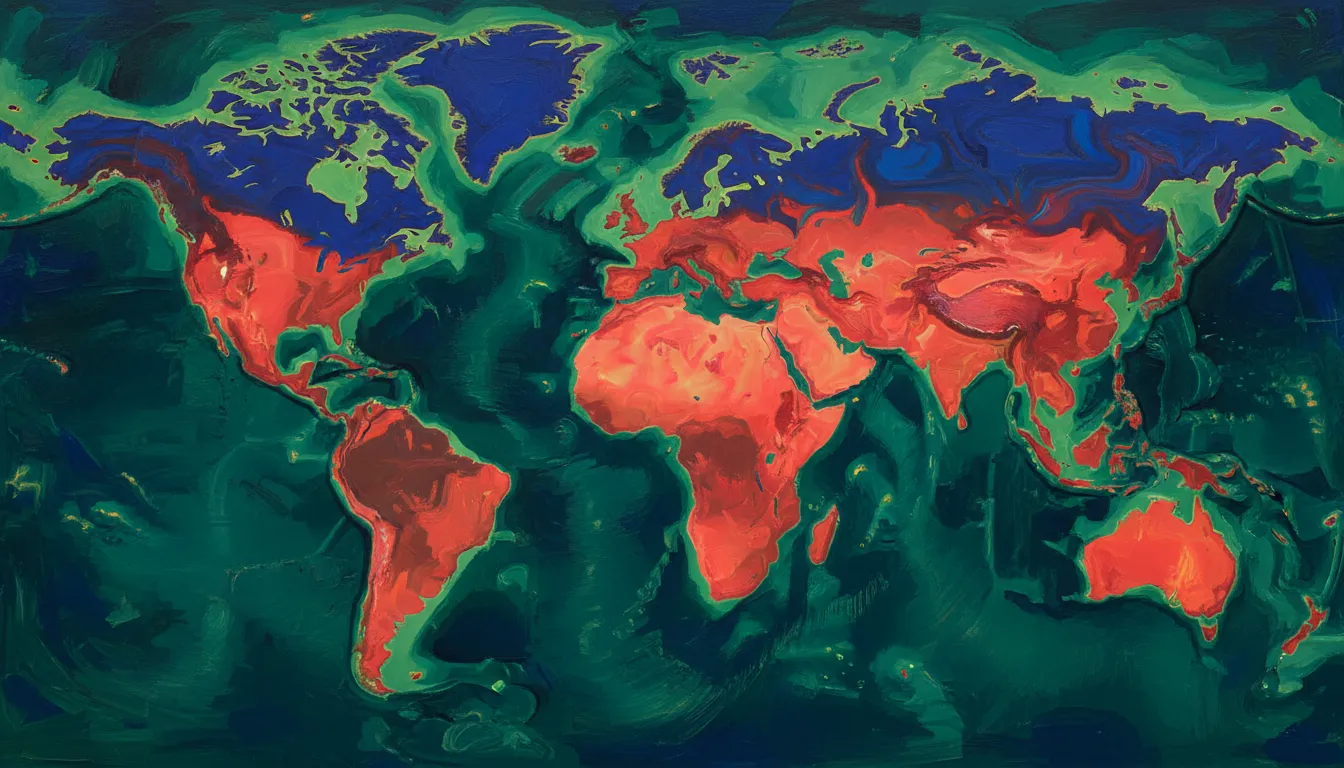
The legal status of transgender people varies radically from one country to another. While some states have adopted laws allowing changes to legal gender markers through a simple declaration, others have introduced explicit bans on the legal recognition of gender identity. This global map captures the state of trans rights around the world — a fragmented and constantly evolving landscape.
A fragmented and rapidly evolving landscape
The international framework of trans rights presents a mosaic of profoundly different approaches. According to the “Laws on Us” report published by ILGA World in 2024, national legislations range along a broad spectrum: from full legal recognition based on self-determination to the total criminalization of trans identities [2]. The global trend in recent years shows increasing polarization: on one side, new countries adopt progressive models; on the other, a significant number of states introduce unprecedented restrictions.
The ILGA World Database, constantly updated and available in interactive form, monitors eleven legal categories concerning LGBTI people, including legal gender recognition, protections against discrimination, hate speech laws, and access to healthcare [2]. The Trans Legal Mapping Report, now in its third edition, remains the primary reference tool for analyzing trans legislation worldwide in detail [1].
At the European level, the ILGA-Europe Rainbow Map annually ranks 49 countries based on over 70 indicators related to LGBTI rights [3]. The 2025 edition confirms a trend toward polarization even within the European continent, with significant gaps among European Union member states.
Countries with full legal recognition
A growing number of states have introduced procedures allowing trans people to obtain legal recognition of their gender identity. These models vary in their requirements: some demand medical diagnoses and surgical interventions, while others are based solely on the declaration of the person concerned.
Gender self-determination
The model of gender self-determination (also known as gender self-identification or self-ID) allows changing the gender marker on official documents through a simple declaration, without the need for psychiatric diagnoses, hormonal therapies, or surgical interventions. As of November 2024, twelve countries have adopted legal gender recognition procedures based on self-determination: Argentina, Belgium, Denmark, Finland, Germany, Ireland, Iceland, Luxembourg, Malta, Norway, Portugal, and Spain [1]. In addition, Switzerland and numerous Mexican states, as well as Uruguay, Colombia, Bolivia, and Ecuador in Latin America, have adopted similar models.
Argentina represents the pioneering case. The Ley de Identidad de Genero (Law No. 26,743), passed by the Senate on May 9, 2012 and enacted on May 24 of the same year, established the right of every person to be treated according to their gender identity and to obtain the modification of their civil records — name, photo, and sex — through a simple request to the National Registry [4]. Argentina’s law does not require medical diagnoses, hormonal treatments, or surgical interventions. Furthermore, it guarantees free access to surgical procedures and hormonal therapies for those who desire them, including them in the Mandatory Medical Program. The United Nations described this law as a pioneering step for transgender rights in the region.
Denmark was the first European country to adopt the self-determination model. On September 1, 2014, an amendment to the law governing the Danish National Registry came into effect, eliminating the requirements of psychiatric diagnosis, sterilization, and hormonal treatment previously necessary for legal gender change [5]. The procedure provides for a six-month reflection period, after which the person can obtain an update to their social security number, passport, driver’s license, and birth certificate. In the first decade of implementation, approximately 2,500 people used this procedure. As reported by Transgender Europe in 2022, no cases of fraudulent or criminal use of the system occurred.
Malta adopted the Gender Identity, Gender Expression and Sex Characteristics Act (GIGESC Act) in 2015, passed unanimously by Parliament [6]. The law allows people aged 16 and over to change their legal gender through a declaration before a notary, without medical requirements. Malta was also the first country in the world to ban normalizing surgical interventions on intersex minors without their informed consent [6]. In July 2024, the Maltese Parliament extended the possibility of registering a non-binary gender on birth certificates.
Germany took a significant step with the Selbstbestimmungsgesetz (Self-Determination Act), passed by the Bundestag on April 12, 2024 and effective from November 1, 2024 [7]. The law replaces the previous Transsexuellengesetz of 1980, eliminating the requirement for psychological evaluations and medical diagnoses. The new procedure requires a declaration at the local registry office (Standesamt), preceded by a three-month waiting period. People aged 14 and over can access the procedure [7]. In the first two months of implementation (November-December 2024), the Federal Statistical Office recorded 10,589 gender changes, compared to only 596 cases registered in the ten preceding months under the old law.
Countries with medical requirements
Many other countries allow legal gender recognition but make it contingent on various medical requirements: diagnosis of gender dysphoria, periods of hormonal therapy, psychiatric evaluations, or in some cases, mandatory sterilization [1]. These include Italy, France, the Netherlands, Japan, and many others. In recent years, the trend has been toward the progressive elimination of the most invasive requirements, particularly sterilization, which has been declared incompatible with human rights by the European Court of Human Rights.
Countries with increasing restrictions
United States: a legislative patchwork
The situation in the United States represents perhaps the most emblematic case of internal polarization. In the absence of a uniform federal law, each state can adopt its own regulations regarding gender identity. According to the Trans Legislation Tracker, in 2025, over 1,000 bills were introduced that would have a negative impact on trans and gender non-conforming people [8]. Of these, as of July 2025, 54 had been passed [8].
Restrictions primarily concern four areas. Access to gender-affirming healthcare for minors has been banned or limited in 27 states, affecting approximately 40% of trans youth aged 13 to 17 [8]. The use of bathrooms corresponding to one’s gender identity in public buildings is banned in 19 states. Participation in school sports based on one’s gender identity is subject to restrictions in numerous states. In six states, providing gender-affirming care to minors constitutes a criminal offense [8].
The Williams Institute at UCLA estimated that in 2025, more than half (53%) of all trans youth aged 13 to 17 lived in one of the 29 states that had passed at least one restrictive law.
United Kingdom: the post-Cass debate
In the United Kingdom, the debate on trans rights has intensified following the publication of the Cass Review in April 2024 [9]. This systematic review, commissioned by the National Health Service and led by pediatrician Hilary Cass, examined gender identity services for children and young people, recommending that puberty suppression with GnRH agonists should be available to trans adolescents only within the context of clinical trials [9]. The British government subsequently banned the prescription of puberty blockers to minors outside of research settings.
The Cass Review generated a broad debate. Within the United Kingdom, its conclusions were adopted by the NHS and supported by the major political parties. Internationally, however, the review received criticism from professional organizations and in peer-reviewed literature for methodological problems and the alleged exclusion of evidence in favor of affirmative care. In 2025, the medical scientific societies of Germany, Austria, and Switzerland published new guidelines on transgender healthcare that criticized the methodology of the Cass Review.
Russia and Hungary
Russia passed a comprehensive ban on legal gender recognition and access to trans-specific healthcare in July 2023, radically limiting the autonomy of individuals over their own identity and body.
Hungary stopped accepting requests for legal gender change as early as 2018. In May 2020, Parliament formally eliminated the possibility of legal gender recognition [14], and in February 2023, the Constitutional Court upheld the block on new applications. The country also adopted a law in 2021 banning the dissemination of information related to sexual orientation and gender identity to minors, modeled on Russian legislation from 2013.
According to the Trans Rights Index 2024 published by TGEU (Transgender Europe), Russia, Hungary, Bulgaria, and Kyrgyzstan have completely removed the right to legal gender recognition in recent years [15].
Africa and Asia: a heterogeneous landscape
Sub-Saharan Africa
The African continent presents a particularly complex picture. Of 54 countries, approximately 30 criminalize same-sex relationships, and about half prohibit trans people from changing the gender marker on identity documents [2]. South Africa remains a significant exception, having recognized the possibility of legal gender change since 2003.
In 2024, Namibia represented a positive sign, with the High Court declaring unconstitutional the colonial sodomy law. However, in the same year, Mali and Burkina Faso introduced new laws criminalizing homosexual relationships. In Uganda, the draconian anti-homosexuality law of 2023, which provides for the death penalty in certain cases, was upheld in court in April 2024, forcing many LGBTI people to flee the country [2].
India: recognition of the third gender
India represents a peculiar case in the Asian landscape. In 2014, the Supreme Court issued the historic NALSA v. Union of India ruling, recognizing transgender people as a third gender and affirming that the fundamental rights guaranteed by the Indian Constitution apply fully to them as well [10]. The Court established that gender identity does not refer to biological characteristics but to the intimate perception of one’s own gender, and recognized the right to self-identification [10].
In 2019, the Indian Parliament passed the Transgender Persons (Protection of Rights) Act, which prohibits discrimination against transgender people in various areas including education, employment, healthcare, and access to public services. However, the law was criticized by trans communities for some of its provisions, particularly for the incomplete recognition of the principle of self-determination and the bureaucratic procedures required to obtain an identity certificate.
Iran: the paradox
Iran presents a paradoxical situation. Sex reassignment surgery has been legal since 1987, following a religious decree (fatwa) issued by Ayatollah Khomeini, and the government provides financial assistance in the form of grants and loans to cover the costs of the procedure [11]. Iran is the only Muslim-majority country where surgical sex reassignment is formally recognized by the state.
However, this apparent recognition exists in a context where homosexuality is punishable by death. Human rights organizations, including the Iranian Lesbian and Transgender Network (6Rang), have documented how gay people are coercively directed toward reassignment surgery, presented as a “cure” for their homosexuality [11]. Iran’s policy does not represent a form of tolerance toward trans people, but rather a tool for eliminating homosexuality through forced pathologization.
International organizations and supranational law
The United Nations
The United Nations system has addressed the topic of gender identity with increasing attention. In 2011, the UN Human Rights Council adopted the first-ever resolution on the human rights of LGBT people, passed with 23 votes in favor, 19 against, and 3 abstentions [12]. A second resolution followed in 2014, with a wider margin (25 in favor, 14 against, 7 abstentions) [12].
In 2016, the Council established the mandate of the Independent Expert on protection against violence and discrimination based on sexual orientation and gender identity (IESOGI), renewed in 2019, 2022, and 2025 [12]. The most recent renewal, in July 2025, received 29 votes in favor, 15 against, and 3 abstentions, following a campaign supported by 1,259 non-governmental organizations from 157 countries.
The European Court of Human Rights
The European Court of Human Rights (ECHR) has developed significant jurisprudence on gender identity. As early as the Christine Goodwin v. United Kingdom judgment of 2002, the Court established that the failure to legally recognize gender reassignment violates Article 8 of the Convention (right to respect for private life).
In recent years, the Court has further expanded protections. In the case W.W. v. Poland (July 2024), the Court found a violation of Article 8 for having detained a transgender woman in a men’s prison despite her transition. In the case T.H. v. Czech Republic (June 2025), the Court declared that the requirement of irreversible sterilization as a condition for legal gender recognition constitutes a disproportionate interference with the right to private life.
The Court of Justice of the European Union has also contributed to the evolution of the legal framework. In March 2025, in case C-247/23, the Court affirmed that individuals have the right to rectification of inaccurate personal data under Article 16 of the GDPR, without undue burdens such as surgery being imposed.
The Yogyakarta Principles
The Yogyakarta Principles, adopted in November 2006 by 29 human rights experts from 25 countries, represent the first systematic attempt to apply international human rights law to issues of sexual orientation and gender identity [13]. The Principles for the first time defined the terms “sexual orientation” and “gender identity” in an international context, identifying possible rights violations on these grounds.
In 2017, the Principles were supplemented by the Yogyakarta Principles plus 10 (YP+10), which reflect developments in international law and include new areas such as gender expression and sex characteristics [13]. Although the Yogyakarta Principles have not been formally adopted by the United Nations, they constitute a widely cited reference point in international jurisprudence and public policy documents.
Conclusion
The global landscape of trans rights remains characterized by profound inequalities. On one hand, the principle of gender self-determination is affirmed in a growing number of countries, with simplified procedures that remove medical and psychiatric requirements. On the other, new forms of restriction emerge both in democratic contexts (such as individual US states and the United Kingdom) and in authoritarian regimes (such as Russia and Hungary) [15].
International organizations play an increasing role in defining minimum standards of protection, but their ability to influence national legislation remains limited. The tension between the recognition of gender identity as a fundamental right and cultural, religious, and political resistance will continue to define the global debate in the years to come.