Sylvia Rivera: the voice of the most vulnerable
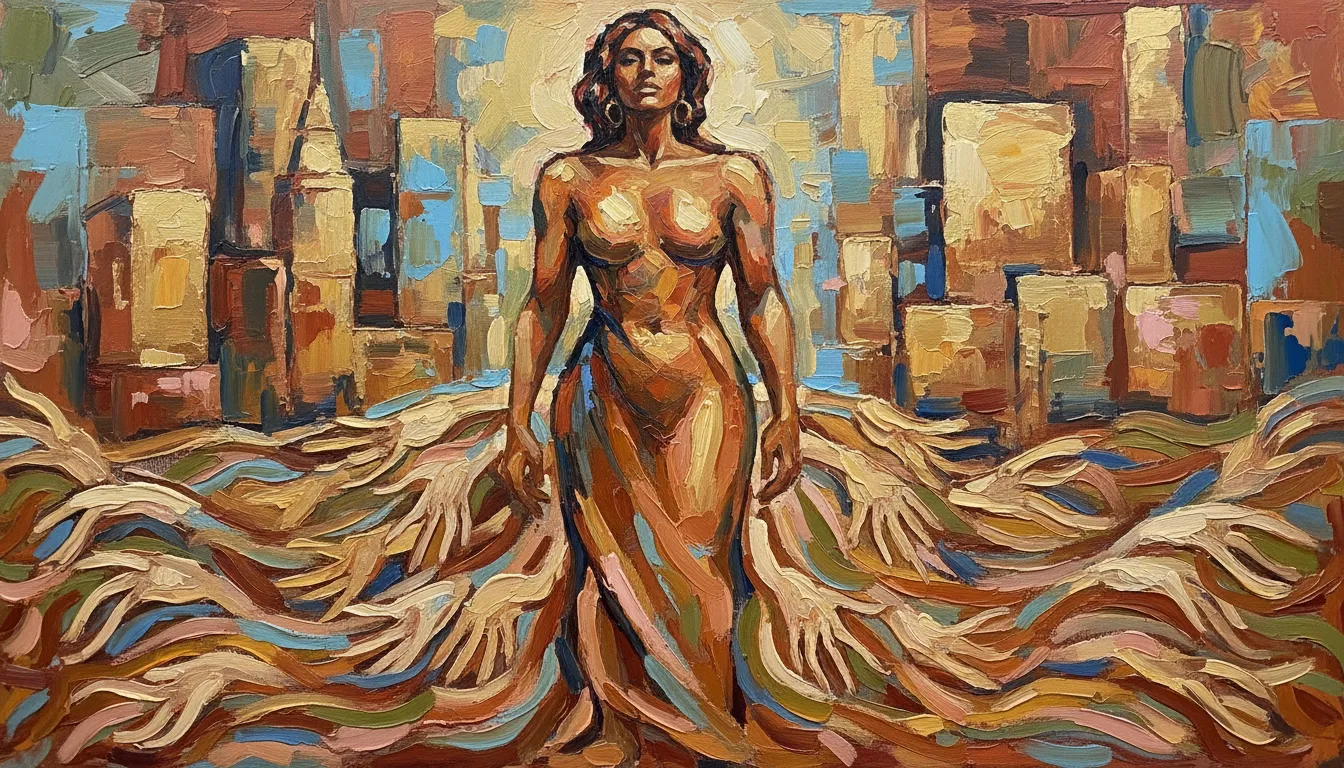
Sylvia Rivera was one of the most courageous and uncompromising voices in the history of the LGBTQ+ movement. A tireless activist, political agitator, and protector of the most marginalized people, she dedicated her life to ensuring that the fight for LGBTQ+ rights never forgot those at the margins — poor trans people, homeless people, people of color, sex workers, and incarcerated people. Her legacy is that of an activist who refused compromise when it meant abandoning the most vulnerable.
Origins and a difficult childhood
Sylvia Ray Rivera was born on July 2, 1951, in the Bronx, New York, to a Puerto Rican father and a Venezuelan mother [1]. Her birth name was Ray Rivera. Her childhood was marked by deep trauma: her father, Jose Rivera, abandoned the family when Sylvia was very young, and her mother, Carmen, died by suicide when Sylvia was only three years old [1][4].
After her mother’s death, Sylvia was raised by her Venezuelan grandmother [1]. However, the relationship was difficult. The grandmother strongly disapproved of Sylvia’s effeminate behavior, especially when, in fourth grade, she began wearing makeup [1]. Family hostility and the lack of acceptance made domestic life unbearable.
At only 11 years old, Sylvia ran away from home and ended up living on the streets in the Times Square neighborhood, at the time a zone known for prostitution and marginal nightlife [1][4]. Here, Sylvia was a victim of sexual exploitation, a brutal reality shared by many young LGBTQ+ people cast out by their families.
Despite these terrible circumstances, Sylvia found community among other drag queens, sex workers, and young queer people living on the margins. This experience — of survival on the streets, of solidarity with other marginalized people — would profoundly shape her political vision for the rest of her life.
Stonewall and political awakening
On the night of June 28, 1969, when police raided the Stonewall Inn in Greenwich Village, Sylvia Rivera was only 17 years old [1]. Her exact role in the Stonewall uprising has been the subject of historical debate. Some historians, based on interviews with other activists of the era, have questioned whether Sylvia was actually present on the first night of the disturbances [1].
However, what is indisputable is that Sylvia was an active participant in the protests that followed and that Stonewall represented a transformative moment for her. After Stonewall, Sylvia joined the Gay Liberation Front (GLF), one of the first radical gay activism groups formed in the wake of the uprising [1].
In the GLF, Sylvia began to develop a more articulate political consciousness. But from the start, she noticed a tension: the emerging gay rights movement tended to privilege the voices and experiences of white, middle-class gay men, while trans people, especially poor trans women of color, were marginalized or excluded entirely.
STAR: a revolution for those living on the streets
In 1970, Sylvia and her close friend Marsha P. Johnson founded STAR (Street Transvestite Action Revolutionaries), an organization that would become legendary in the history of trans activism [1][3]. The name itself was provocative: it used the term “transvestite,” which was the most common language at the time, and openly declared its “revolutionary” character.
STAR was not just an abstract advocacy group. Sylvia and Marsha believed in direct action and concrete material support [5]. In November 1970, they opened the STAR House, located in a former abandoned residential building at 213 East Second Street in Manhattan’s East Village [5].
The STAR House was, in effect, the first shelter for homeless LGBTQ+ youth in the United States [3][5]. Sylvia and Marsha raised money (primarily through sex work, which both continued to do) to pay the $200 monthly rent and to provide food, clothing, and a safe place to sleep for the young drag queens and trans people living on the streets [5].
Living in the STAR House required nothing in return. Sylvia and Marsha insisted that the young people living there should not have to engage in sex work — they themselves did that work to sustain the house [5]. This model of mutual care and concrete solidarity was revolutionary. STAR did not demand respectability or conformity; it offered survival and dignity.
The STAR House operated from the fall of 1970 until the summer of 1971, when financial and logistical challenges became unsustainable [3][5]. But the impact was lasting: it demonstrated that it was possible to create support structures led by trans people themselves, centered on the real needs of the most marginalized.
1973: “Y’all Better Quiet Down”
On June 24, 1973, during the Christopher Street Liberation Day Rally at Washington Square Park — the event commemorating Stonewall that would become the annual Pride celebration — a moment occurred that would define Sylvia Rivera’s legacy [1].
Jean O’Leary, a lesbian feminist activist, was speaking from the main stage criticizing drag queens and calling for them not to participate in the gay movement’s demonstrations. Her position reflected a current within the movement that saw trans people and drag queens as “embarrassing,” an obstacle to mainstream acceptance.
Sylvia and activist Lee Brewster did not accept this in silence. Sylvia physically climbed onto the stage, grabbed the microphone, and began to speak [1][4]. What followed has become known as the “Y’all Better Quiet Down” speech — one of the most powerful and raw moments in the history of LGBTQ+ activism.
As the crowd booed, shouted, and tried to get her off the stage, Sylvia cried into the microphone:
“Y’all better quiet down! I’ve been trying to get up here all day for your gay brothers and your gay sisters in jail that write me every motherfucking week and ask for your help and you all don’t do a goddamn thing for them!”
Sylvia continued, her voice trembling with rage and pain, denouncing the hypocrisy of a movement that celebrated Stonewall — an uprising started by drag queens, sex workers, and trans people — but then refused to help those same people when they were in prison, when they were living on the streets, when they were being beaten by the police.
The crowd’s reaction was hostile. Many continued to boo. Some people shouted insults. But Sylvia did not stop. She finished her speech, left the stage, and in that moment became a symbol of something fundamental: the refusal to make the most vulnerable people invisible for political convenience.
That speech also marked the beginning of a period of even deeper marginalization for Sylvia within the movement. Many gay activists avoided her. She was considered too radical, too difficult, too unwilling to compromise.
Years of marginalization
The 1970s and 1980s were extremely difficult for Sylvia. While the gay rights movement achieved some victories — legal protections in some cities, greater visibility — these victories often explicitly excluded trans people [1]. Many emerging “gay rights” laws concerned only sexual orientation, not gender identity.
Sylvia continued to fight, but increasingly at the margins. She still worked as a sex worker, faced poverty, and struggled with addiction and mental health issues [1]. For periods, she was homeless, literally living on the streets or in makeshift encampments.
During the 1980s, as the AIDS epidemic devastated the LGBTQ+ community, Sylvia became involved in ACT UP (AIDS Coalition to Unleash Power), participating in demonstrations and direct actions [1]. But even here, her presence was often uncomfortable for some.
During this period, Sylvia often lived in conditions of extreme precarity. For a time, she lived in a makeshift encampment near the Hudson River, in a kind of permanent protest against the abandonment of homeless people by the mainstream LGBTQ+ movement.
The return in the 1990s
In the 1990s, there was a kind of reconciliation — or at least a belated recognition. In 1994, on the 25th anniversary of Stonewall, Sylvia was invited to participate in an honorary role in the commemorative march [1]. It was an acknowledgment of her contribution, even if late.
But Sylvia was not interested only in symbolic honors. She continued to fight for concrete issues. In particular, she fiercely opposed the proposed SONDA (Sexual Orientation Non-Discrimination Act) in New York State, which had been periodically introduced since the 1970s [1][4].
The problem with SONDA? It did not include protections for trans people. The law protected against sexual orientation discrimination but not gender identity discrimination [1]. For Sylvia, this was unacceptable — another example of the gay movement winning rights for some while abandoning the most vulnerable.
Sylvia publicly denounced mainstream LGBTQ+ organizations, such as the Empire State Pride Agenda, that supported SONDA in its limited form. She argued that accepting a law without trans protections meant betraying the people who had started the movement.
Literally on the day of her death — February 19, 2002 — while bedridden and gravely ill, Sylvia met with delegates from the Empire State Pride Agenda to discuss the inclusion of trans protections in SONDA [1][4]. Even in her final hours, she was fighting.
Death and legacy
Sylvia Rivera died on February 19, 2002, at the age of 50, from complications of liver cancer [1]. She died at St. Vincent’s Hospital in Manhattan, the same hospital that had treated countless patients during the AIDS epidemic.
Her death was a moment of profound mourning for the LGBTQ+ community, especially for trans people. Hundreds of people attended her funeral, finally recognizing the breadth of her contribution.
In the years following her death, Sylvia’s legacy has grown enormously:
The Sylvia Rivera Law Project: In 2002, shortly after Sylvia’s death, attorney and trans activist Dean Spade founded the Sylvia Rivera Law Project (SRLP), a legal organization that provides free legal services to low-income trans, intersex, and gender-nonconforming people and people of color [4]. The organization embodies Sylvia’s values: centering the most marginalized.
Geographic recognition: In 2005, the corner of Christopher Street and Hudson Street — just two blocks from the Stonewall Inn — was renamed “Sylvia Rivera Way” in her honor [1].
Historical awareness: In the last two decades, there has been a rediscovery and reappraisal of Sylvia’s contribution to LGBTQ+ history [2]. Books, documentaries, and scholarly articles have brought her story to a wider audience.
Inspiration for contemporary activism: Her model of activism — centered on the most marginalized, refusing compromises that exclude the vulnerable, combining political theory with concrete material support — continues to inspire a new generation of trans activists.
Lessons from her activism
What can we learn from Sylvia Rivera today? Several lessons emerge from her life:
No one left behind: Sylvia rejected any “progress” that meant abandoning the most vulnerable. Her question was always: who is being excluded? Who is being left behind? This remains a fundamental challenge for all social justice movements.
The personal is political, but so is the material: Sylvia did not separate political analysis from concrete action. Founding the STAR House was not just a symbolic gesture — it was a recognition that people need homes, food, safety [5]. Activism must address material needs.
Anger as moral clarity: Sylvia’s 1973 speech was filled with anger — and that anger was justified. Sylvia reminds us that anger in the face of injustice is not something to be repressed or made “respectable.” It is an appropriate response and can fuel change.
Complex identities: Sylvia used different terms to describe herself over the course of her life — drag queen, transsexual, transgender [1]. This reflects both changes in language over time and the complexity of identity. Sylvia reminds us not to impose rigid categories.
The struggle continues: Sylvia never retired, even when the movement marginalized her, even when she was homeless, even when she was ill. Until the very end, she was fighting. This kind of long-term commitment is what builds lasting movements.
Sylvia and Marsha: a revolutionary friendship
It is impossible to speak of Sylvia without mentioning her relationship with Marsha P. Johnson. The two were deep friends, activist companions, and in many ways, chosen family.
Marsha and Sylvia had different temperaments — Marsha was known for her joyful spirit and luminous presence, while Sylvia was more combative and often angry — but they shared a fundamental political vision: that liberation must begin with the most marginalized people.
Together, they founded STAR and ran the STAR House [3][5]. Together, they survived the streets of New York. Together, they faced violence, poverty, and marginalization within their own movement.
When Marsha died mysteriously in 1992, Sylvia was devastated [1]. She lost not only a friend but a comrade who had shared decades of struggle. Marsha’s death also marked a moment of profound loneliness for Sylvia, who lost one of her closest allies.
The Latina context and cultural roots
An aspect of Sylvia’s life that deserves more attention is her Latina identity. The daughter of a Puerto Rican father and a Venezuelan mother, Sylvia grew up in a Latino community in the Bronx [1].
Being Latina, trans, and poor meant navigating multiple forms of marginalization. Sylvia faced not only transphobia but also racism and xenophobia. Latino communities of the 1960s and 1970s, like many others, often held conservative attitudes regarding gender and sexuality, making Sylvia’s experience particularly isolating.
At the same time, Sylvia brought values into her activism that reflected aspects of Latino cultures — the importance of family (even if not biological), community solidarity, and a sense of dignity in the face of oppression.
In an era when the dominant LGBTQ+ narrative was often white and anglophone, Sylvia represented a different voice — one that insisted that race, class, and culture were inseparable from the fight for LGBTQ+ rights.
Conclusion: a voice that could not be silenced
Sylvia Rivera was not easy. She was angry, sometimes difficult, and she refused compromise. But her “difficulty” was an appropriate response to a world that constantly sought to silence her and people like her.
Her life reminds us that real progress does not happen through assimilation or the sacrifice of the most vulnerable on the altar of respectability. It happens when those who are most marginalized lead the movement, when their voices are not merely heard but centered.
Today, as we celebrate progress in LGBTQ+ rights — marriage equality, greater visibility, legal protections in many places — we must also remember the question Sylvia always posed: who is being left behind? Trans people continue to face alarming rates of violence. Trans women of color are killed with terrifying regularity. Homeless trans people, incarcerated trans people, and trans sex workers — the categories Sylvia defended — remain among the most vulnerable.
Honoring Sylvia Rivera means more than remembering her name or quoting her 1973 speech. It means committing to the fight she began — for housing for homeless trans people, for an end to police violence, for prison abolition, for the decriminalization of sex work, for economic justice.
It means, as she did, refusing any version of “liberation” that does not include everyone. It means being willing to be uncomfortable, to disrupt, to insist that no one be left behind.
Sylvia’s voice — that voice that cried “Y’all better quiet down!” against a hostile crowd — was not silenced by her death. It continues to resonate, a challenge and an invitation: to build movements that are truly inclusive, that center the most marginalized, that refuse compromise when it means abandoning those who are most vulnerable.
This is Sylvia Rivera’s legacy: a voice that could not and cannot be silenced, one that continues to call us to do better, to do more, to not settle until everyone is free.
Frequently asked questions
Who was Sylvia Rivera?
Sylvia Rivera (1951-2002) was a Latina trans activist of Venezuelan and Puerto Rican descent, co-founder of STAR, and one of the most combative figures in the fight for the rights of the most marginalized trans people. She is remembered for her courage in denouncing the exclusion of trans people from the mainstream gay movement.
What was STAR and why was it important?
STAR (Street Transvestite Action Revolutionaries) was an organization founded by Sylvia Rivera and Marsha P. Johnson in 1970. It provided shelter and support to homeless LGBTQ+ youth, particularly trans people and drag queens, through the STAR House in the East Village.
What happened at the 1973 Pride rally?
At the 1973 Christopher Street Liberation Day Rally, Sylvia Rivera delivered a passionate speech denouncing the abandonment of the most vulnerable trans people by the mainstream gay movement. She was booed and heckled, but her speech 'Y'all Better Quiet Down' has become iconic.
What is the Sylvia Rivera Law Project?
The Sylvia Rivera Law Project is a legal organization founded in 2002 by Dean Spade to provide free legal support to low-income trans, intersex, and gender-nonconforming people and people of color. It continues Sylvia's legacy by focusing on the most marginalized.
Further reading
- documentary The Death and Life of Marsha P. Johnson (2017)
- book Street Transvestites Action Revolutionaries: Survival, Revolt, and Queer Antagonist Struggle (2013)
- documentary Sylvia Rivera: Queens in Exile (2021)