Paris Is Burning: the documentary on New York's ball culture
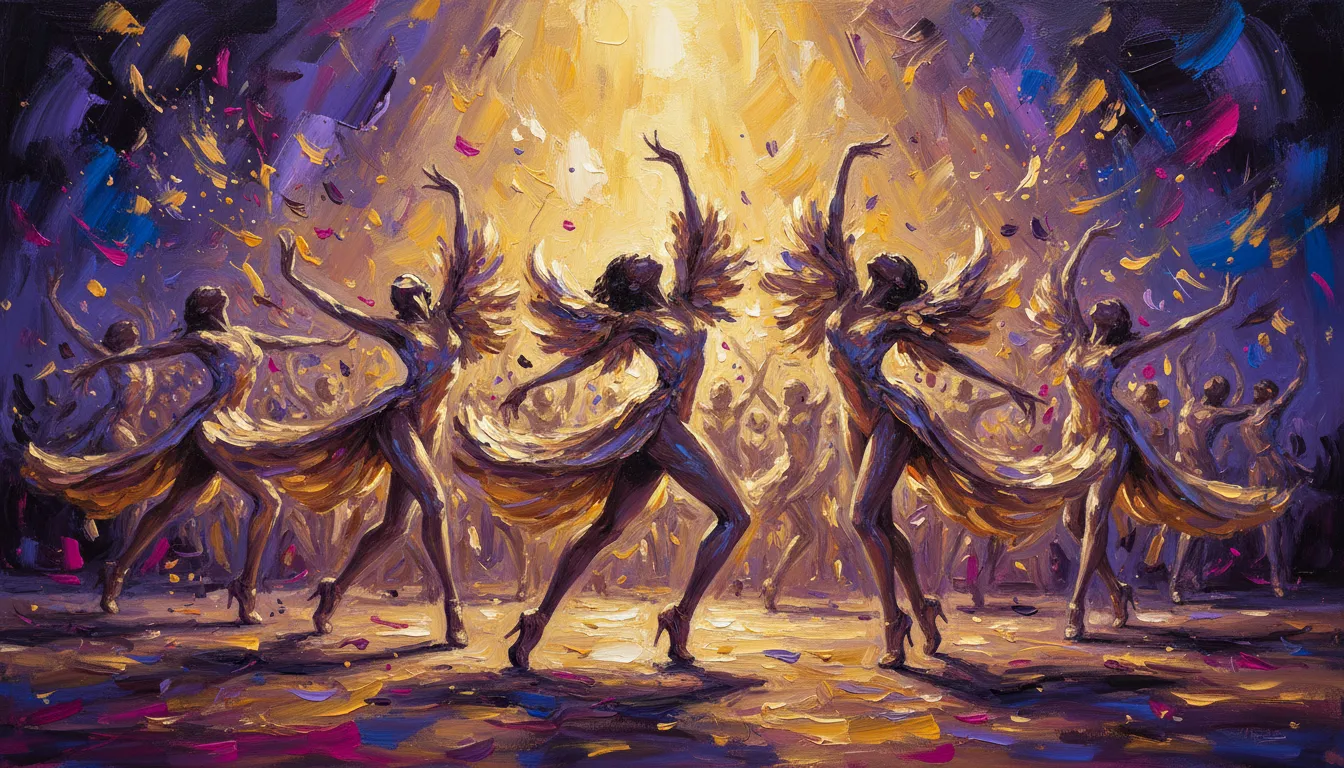
A document that changed culture
Few documentaries in the history of cinema can claim a cultural influence comparable to that of “Paris Is Burning.” Shot between 1985 and 1989 by director Jennie Livingston and released in theaters in 1990, this 78-minute film captured a vibrant, creative, and tragic underground world: the ball culture of New York’s Black and Latino LGBTQ+ communities [1][2].
The documentary does more than document a cultural phenomenon. It tells the stories of people who, rejected by their families and by society, created alternative structures of affection, identity, and survival. Among drag queens, trans women, gay men, and queer people, “Paris Is Burning” offers an unforgettable portrait of a community that, in the midst of the AIDS epidemic, found in creativity and solidarity the reasons to carry on.
What is ball culture
To understand “Paris Is Burning,” one must know the phenomenon it documents. Ball culture was born in the African American and Latino communities of New York in the 1960s, as a response to the marginalization that queer and trans people of color faced both in mainstream society and within the LGBTQ+ community itself, which was dominated by white men [7].
The “balls” were nighttime events — held in halls, clubs, and sometimes gyms — where participants competed in various categories. These were not simply runway walks: they were elaborate performances that required talent, creativity, charisma, and hours of preparation. Categories ranged from “realness” — the ability to “pass” as a cisgender heterosexual person — to “voguing,” a dance style inspired by the poses of models in fashion magazines [7].
At the center of ball culture were the “houses”: alternative families, led by “mothers” and “fathers,” that offered queer and trans youth rejected by their biological families a roof, emotional support, guidance, and a sense of belonging [7]. The names of the houses — LaBeija, Xtravaganza, Ninja, Corey, Saint Laurent — became adopted surnames, symbols of identity and pride.
The protagonists: voices from the community
The power of “Paris Is Burning” lies in the people it portrays. Livingston devotes time and attention to each protagonist, allowing their stories to emerge with all the complexity and humanity they deserve.
Venus Xtravaganza is perhaps the most tragic figure in the documentary. A Latina trans woman and member of the House of Xtravaganza, Venus dreamed of becoming a “complete” woman — of undergoing gender-affirming surgery — and of marrying a wealthy man who would take her away from poverty [4]. Her story is told with tenderness in the film, but concludes with a devastating revelation: Venus was found murdered under a bed in a hotel room during the filming of the documentary. She was 23 years old. Her murder, never solved, remains a symbol of the violence that strikes trans women, particularly those of color [4].
Pepper LaBeija was the legendary mother of the House of LaBeija, one of the oldest and most respected houses in ball culture [6]. In the documentary, Pepper recounts with humor and wisdom her experience as a Black trans woman, reflecting on discrimination, beauty, and the meaning of building a chosen family. Her regal elegance and her ability to articulate the social dynamics of the community make her one of the most memorable voices in the film.
Dorian Corey, a New York drag icon, offers some of the documentary’s most profound reflections. Her words about the difference between “making history” and “simply surviving” have become iconic: “In my era, you wanted to become a star. Then you wanted to be somebody. Now you just want to be. To survive” [1].
Willi Ninja, the “godfather of voguing,” transformed this dance into an art form recognized worldwide [5]. His mastery of voguing directly influenced Madonna, who involved him in her “Vogue” music video (1990), bringing ball culture’s dance into living rooms around the world.
Octavia Saint Laurent, a trans woman who dreamed of becoming a top model, represents in the film the aspiration and frustration of those who seek recognition in a world that denies it [1]. Her beauty and talent were undeniable, but the doors of the fashion industry remained closed to a Black trans woman in the 1980s.
The context: AIDS, racism, and survival
“Paris Is Burning” was filmed during a devastating period for the community it portrays. The AIDS epidemic was decimating New York’s gay and trans community, disproportionately affecting people of color who had less access to medical care and support services.
The film does not address AIDS explicitly, but its shadow is present in every scene. Many of the people interviewed in the documentary would die of AIDS in subsequent years [1]. The film thus became, unintentionally, a funeral monument: the testimony of a community that was disappearing.
But “Paris Is Burning” also documents the extraordinary resilience of this community. In a context of poverty, racial discrimination, homophobia, and transphobia, the people of ball culture created a parallel universe where they could be celebrated for who they were. The balls were spaces of radical affirmation: places where a Black trans woman could be applauded, admired, and crowned queen.
The influence on pop culture
The cultural impact of “Paris Is Burning” has been immense and enduring, far beyond the boundaries of the community it portrays [5].
Madonna and “Vogue”: In 1990, the same year the documentary was released, Madonna released “Vogue,” bringing voguing and the language of ball culture into the global musical mainstream [5]. The single sold millions of copies, but also generated controversy: many in the ball community felt that Madonna had appropriated their culture without giving adequate credit or compensation.
Language: Expressions born in ball culture — “shade,” “reading,” “work,” “fierce,” “slay,” “serving face” — have entered the everyday vocabulary of contemporary English, often without users knowing their origin [5].
RuPaul’s Drag Race: The hugely popular reality show, which began in 2009, owes a great deal to the ball culture documented in “Paris Is Burning.” The format itself — categories, runway walks, judging — is a television version of the balls, and the language used on the show derives directly from that tradition [5].
Pose: The TV series created by Ryan Murphy (2018-2021) is the most direct spiritual heir of “Paris Is Burning.” Set in New York’s ball culture of the 1980s and ’90s, “Pose” has the merit of having cast trans actresses in leading roles and in production, finally giving the community the opportunity to tell its own story.
Criticisms and debates
“Paris Is Burning” has not been free from criticism, some of which comes from the very community it portrays.
The most significant criticism concerns the director’s position. Jennie Livingston, a white cisgender woman, filmed a Black and Latino LGBTQ+ community and received professional recognition and, to a limited extent, financial gain from it [1]. Scholar bell hooks criticized the film in an influential essay, arguing that Livingston’s gaze reproduced colonial dynamics of observation and appropriation.
Some participants in the documentary have expressed frustration at not receiving adequate compensation. The film was made on a very low budget, and subsequent profits were not equitably distributed among the people portrayed [1].
These criticisms do not diminish the documentary’s value, but invite a broader reflection on who has the right and responsibility to tell the stories of marginalized communities.
Institutional recognition
In 2016, “Paris Is Burning” was selected for preservation in the National Film Registry of the Library of Congress of the United States, a recognition reserved for films considered “culturally, historically, or aesthetically significant” [3]. This inclusion officially confirmed the documentary’s value as a fundamental historical document of American culture.
The film is now studied at universities around the world, in departments of cultural studies, gender studies, African American studies, and film. It has become a foundational text for understanding the intersections of race, class, gender, and sexuality in 20th-century America.
The legacy: remembering so as not to forget
“Paris Is Burning” remains, more than thirty years after its release, an essential document. It tells of a community that created beauty in the midst of devastation, that built families when biological families had rejected them, that invented art forms that would conquer the entire world.
But it also tells of injustice: poverty, violence, racism, transphobia, the AIDS epidemic. The death of Venus Xtravaganza, inserted into the documentary as a raw and devastating fact, reminds us that the lives of trans women of color were — and often still are — considered expendable [4].
For those who watch “Paris Is Burning” today, the film is an invitation to learn the roots of a culture that permeates our daily lives. Every time someone uses the word “slay,” every time a contestant walks in a fashion reality show, every time voguing appears in a music video, there is the echo of those 1980s New York balls and the courageous people who created them [5].
The documentary is available on various streaming platforms and remains an essential starting point for anyone who wants to understand the history of the trans movement and contemporary LGBTQ+ culture.
Want to learn more about the history of transgender people? Subscribe to the Traidue newsletter to receive new articles, resources, and updates about the LGBTQIA+ community.
Frequently asked questions
What is Paris Is Burning about?
Paris Is Burning (1990) is a documentary that captures the ball culture of 1980s New York, a cultural phenomenon rooted in Black and Latino LGBTQ+ communities. The film documents the balls -- competitive events of dance and performance -- and the 'houses,' alternative families that offered support to marginalized queer and trans youth.
What is ball culture?
Ball culture is a subcultural movement that originated in the African American and Latino LGBTQ+ communities of New York in the 1960s. It is organized around 'balls,' competitive events where participants walk in various categories, and 'houses,' alternative families led by 'mothers' and 'fathers' who provide support and protection to members.
Who are the protagonists of Paris Is Burning?
Among the protagonists are Venus Xtravaganza, a trans woman who was tragically murdered during filming; Pepper LaBeija, legendary mother of the House of LaBeija; Dorian Corey, a drag icon; Willi Ninja, the godfather of voguing; and Octavia Saint Laurent, a trans woman who dreamed of becoming a model.
Why is Paris Is Burning important?
The documentary is considered a fundamental historical document. It preserved the memory of ball culture during a period devastated by the AIDS epidemic, enormously influenced pop culture (Madonna, RuPaul's Drag Race), and in 2016 was inducted into the National Film Registry of the Library of Congress for its cultural significance.
Further reading
- Documentary Paris Is Burning (1990)
- serie TV Pose (Ryan Murphy) (2018)
- Documentary Disclosure: Trans Lives on Screen (2020)
- Documentary The Death and Life of Marsha P. Johnson (2017)