Gender dysphoria centers in Italy: the complete map
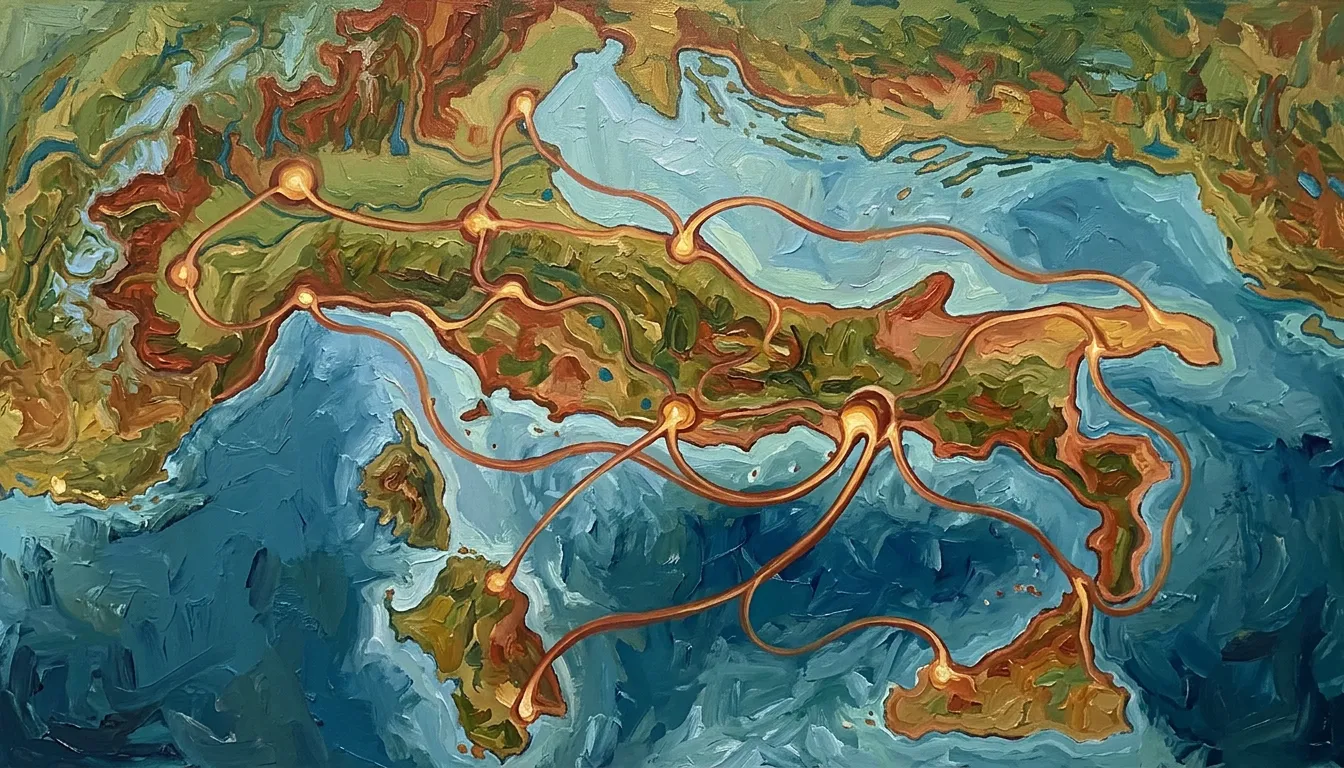
Finding the right center to begin a gender affirmation pathway in Italy is not straightforward. Information is scattered across institutional websites, word of mouth, and online groups, and it is not always up to date. Waiting lists vary enormously, protocols differ from center to center, and the gap between North and South remains significant. This guide gathers in one place verified information about the main Italian public centers, region by region, along with practical guidance on how to access services and what support resources are available.
Introduction
In Italy, the right to gender rectification is enshrined in Law 164 of 1982 [8], one of the first laws of its kind in the world. In the years that followed, a network of public centers developed offering gender affirmation pathways within the National Health Service (SSN). These centers operate with multidisciplinary teams of psychologists, psychiatrists, endocrinologists, and surgeons, following protocols from ONIG (the National Gender Identity Observatory) and the international standards of WPATH [5].
Since 2020, thanks to AIFA rulings, hormonal medications for gender-affirming hormone therapy have been available through the NHS across the national territory [6]. This means that hormone therapy prescribed by an authorized center is free or subject only to co-pays.
The Infotrans.it platform, created by the National Institute of Health (ISS) in collaboration with UNAR, is the primary institutional tool for navigating the service network [1][9]. Its interactive map allows searching for facilities by region, service type, and specialty offered.
However, the distribution of centers is not uniform: the majority of reference facilities are concentrated in the Center-North, leaving large areas of the country with few or no public options. Knowing which centers exist, their features, and how to access them is the first step toward navigating a system that, despite its limitations, offers quality clinical pathways.
How the pathway works
Before moving to the center map, it is helpful to understand how a gender affirmation pathway is structured in Italy. For a detailed step-by-step guide, we refer to the dedicated article on how to start transition.
In summary, the pathway generally follows these phases:
- First contact: approach the general practitioner for a referral or contact the specialized center directly. Many centers accept direct contact without a referral.
- Psychological assessment: a series of sessions with psychologists and/or psychiatrists on the team, aimed not at “proving” one is trans, but at exploring the pathway in an informed way and drafting a psychodiagnostic report [2][5].
- Hormone therapy: if desired, prescribed by the center’s endocrinologist based on the psychological report. Medications are covered by the NHS since 2020 [6].
- Possible surgical procedures: not mandatory, evaluated case by case by the multidisciplinary team.
- Vital records rectification: document changes can be obtained through a court petition, with or without surgical procedures [8].
Italian centers follow a multidisciplinary team model, in which different specialists collaborate to offer an integrated pathway. This approach, recommended by WPATH SOC 8 [5], ensures that every aspect of the pathway — psychological, medical, surgical, and legal — is managed in a coordinated way. Each pathway is individual: not everyone wants or needs all the listed phases.
Public centers
Listed below are the main Italian public centers, organized by geographic area. Information has been verified through the Infotrans.it portal [1], the SICPRE census [3][10], and the FIMP mapping [4]. It is always advisable to contact the center before visiting, to check updated hours and access procedures.
Northwest
CIDIGEM — Turin
The Interdepartmental Gender Dysphoria Center (CIDIGEM) has been active since 2005 at the AOU Citta della Salute e della Scienza of Turin (Molinette Hospital). Recognized by the Piedmont region as a regional reference center in 2008, it offers a complete pathway: psychological and psychiatric support, hormone therapy, gender-affirming surgery (vaginoplasty, phalloplasty, breast augmentation, mastectomy, hysterectomy, metoidioplasty), and medico-legal counseling. It provides services for minors through the Neuropsychiatry unit at Regina Margherita Hospital.
- Location: Via Cavour 31, Turin
- Email: cidigem@cittadellasalute.to.it
- Protocols: WPATH, Endocrine Society
CIDIGEM follows WPATH and Endocrine Society guidelines and prepares court reports at no additional cost to the patient.
Niguarda Hospital — Milan
The ASST Grande Ospedale Metropolitano Niguarda hosts a gender adjustment service offering a multidisciplinary pathway with psychiatrists, psychologists, endocrinologists, gynecologists, and plastic surgeons. The sexology service is a reference center for the gender adjustment pathway in Lombardy.
- Location: Piazza Ospedale Maggiore 3, Milan
The first step is a GP referral requesting a visit for “adjustment.” The psychiatric evaluation phase lasts at least six months.
Northeast
CIDIG — Trieste
In Trieste, multiple complementary facilities operate. The Cattinara Hospital (ASUITS) is a center of surgical excellence, particularly known for genital reconstruction. The Gender Dysphoria Center (CIDIG) is based at the Giuliano Isontina University Health Authority (ASU GI).
For minors, the IRCCS Burlo Garofolo hosts APEVAGE (Pediatric Clinic for Gender Variance), which welcomes patients starting from 6 years of age and offers specialized psychological and neuropsychiatric evaluations [4].
MIT Clinic — Bologna
The Trans Identity Movement (MIT) in Bologna operates a clinic in collaboration with the Bologna AUSL and the Sant’Orsola-Malpighi Polyclinic. Founded in 1979, MIT is the oldest transgender association in Italy and offers psychological and psychotherapeutic support, endocrinological pathways, reports and assessments for document changes under Law 164/1982, and services for minors and families. The team follows updated WPATH protocols.
- Location: Via Polese 22, Bologna
- Website: mit-italia.it
Central Italy
SAIFIP — Rome
The Service for the Alignment of Physical and Psychological Identity (SAIFIP), active since 1992 at the San Camillo-Forlanini Hospital, is one of the most historic centers in Italy. It offers psychodiagnostic assessment, individual and group psychotherapy, endocrinological and surgical support. A distinctive feature is the Peer Navigator service: people who have completed their own journey and offer accompaniment to those just beginning. SAIFIP also provides services for minors, employment orientation, and support groups for family members.
- Location: Padiglione Maroncelli, Via Bernardino Ramazzini 68, Rome
- Email: saifip@scamilloforlanini.rm.it
- Walk-in hours: Monday 2:00-5:00 PM, Wednesday 9:00-11:00 AM
Access does not require membership or an association card. SAIFIP prepares reports and assessments for court proceedings.
Gender Dysphoria Clinic — Gemelli Polyclinic, Rome
Since 2024, the Agostino Gemelli IRCCS University Polyclinic has established a Multidisciplinary Gender Dysphoria Clinic, with a dedicated counseling service for minors and families. The team includes specialists in psychiatry, child neuropsychiatry, and clinical psychology.
- Location: Gemelli Polyclinic, Rome
Tuscany
Careggi — Florence
The Andrology, Female Endocrinology and Gender Incongruence unit at AOU Careggi is a nationally recognized center of excellence, particularly well known for its pathways dedicated to minors in developmental age. It operates within a regional Tuscan network established by regional resolution. Careggi was for years Italy’s leading center for preadolescents and adolescents with gender dysphoria.
- Location: Centro Polivalente CUBO, Viale Pieraccini 6, Florence
Consultorio Transgenere — Torre del Lago Puccini
The Consultorio Transgenere Association in Torre del Lago Puccini (Lucca) has been active since 2008, established through collaboration between MIT, the Tuscany region, and the local health authority. It offers reception services, psychological support, healthcare and legal accompaniment. It accepts patients from age 16.
- Location: Via Aurelia Sud 201/203, Torre del Lago Puccini (LU)
- Website: consultoriotransgenere.it
Pisa
The Cisanello University Hospital hosts a center for the diagnosis and treatment of gender dysphoria, with a pathway that includes andrology, urology, and plastic surgery. The center performs sex reassignment surgical procedures [3].
- Location: Cisanello Hospital, Pisa
South and Islands
Naples — Federico II University
The Center for Andrology and Reproductive and Sexual Medicine at the AOU Federico II in Naples offers psychological, psychiatric, endocrinological, and surgical support. Clinical and research activity on gender variance has been active since 1997. The center follows adult and adolescent patients and offers fertility preservation counseling.
- Location: Via Sergio Pansini 5, Naples
Federico II also hosts a clinical psychology program dedicated to gender variance and dysphoria in developmental age, at the Department of Neurosciences.
Bari — Polyclinic
The Regional Reference Center for Gender Dysphoria at the AOU Polyclinic of Bari was established by the Puglia region and is the main center in southeastern Italy. It offers psychological, psychiatric, endocrinological, and surgical support, all covered by the NHS. It has dedicated services for minors (neuropsychiatry, psychotherapy, endocrinology) and family support.
- Location: Piazza Giulio Cesare 11, Bari
- Email: sportello.dh@gmail.com
The center follows WPATH, ONIG, and Endocrine Society protocols and prepares court assessments free of charge.
Palermo — Paolo Giaccone Polyclinic
The Paolo Giaccone Polyclinic of the University of Palermo hosts a multidisciplinary clinic for surgical sex reassignment, active through the Plastic and Reconstructive Surgery unit. It is one of the few specialized surgical centers in southern Italy [3].
- Location: Paolo Giaccone Polyclinic, Palermo
How to access centers
GP referral
The most common way to access a public center is through the general practitioner. A referral for a specialist visit is requested — typically a psychological or endocrinological visit — at the chosen center. Not all GPs are familiar with reference centers: in this case, the name of the facility and the desired specialty can be indicated directly.
Direct access
Many centers also accept direct contact, without a referral. Generally, it is sufficient to call or email the center to schedule an initial consultation. This first meeting is non-binding and serves to gather initial information and explain the offered pathway.
What to bring to the first appointment
For the first consultation, the following are generally sufficient:
- Health card and identity document
- Any prior medical reports or psychological reports (not required, but helpful)
- A list of questions about what you would like to know about the pathway
No prior diagnosis or specific documentation is necessary. The first consultation is a getting-to-know-you moment.
Wait times
Wait times vary enormously from center to center and from service to service. Based on information available on center portals:
- Psychological support: 3 to 12-18 months wait
- Endocrinology: 6 months to over a year
- Surgery: 6 months to over a year
These times are approximate and change frequently. It is always advisable to contact the center directly for updated estimates. Choosing a lesser-known center or one outside your region can sometimes reduce wait times, since the NHS guarantees access to facilities across the national territory.
Private practitioners
In addition to public centers, in Italy it is possible to consult private practitioners specialized in gender identity. This route is chosen by those who want faster timelines, greater flexibility in session frequency, or a specific approach not available at the nearest public center.
What to look for in a private practitioner
A good private practitioner should:
- Have specific training in gender identity and gender dysphoria, not limited to general expertise in sexology
- Follow WPATH protocols and updated international guidelines [5]
- Work in coordination with endocrinologists and other specialists
- Produce reports that are accepted by public centers and courts for the vital records rectification procedure
How to find them
The Infotrans.it map [1] includes both NHS services and associations operating locally, and is the most reliable starting point. Some specialized private centers, such as the Centro Sui Generis in Milan, offer complete pathways with psychologists, psychiatrists, and endocrinologists specifically trained in gender identity.
Local associations (see next section) can provide lists of trusted professionals, often verified through the community’s direct experience.
Approximate costs
Private practitioner costs are borne by the patient. As a rough guide:
- Psychological session: 50-80 euros per session
- Endocrinological visit: 100-200 euros
- Hormone medications: free if prescribed by an authorized center with an NHS treatment plan [6], otherwise out-of-pocket
It is important to know that even those following a private psychological pathway can then access hormone therapy through the NHS, provided that the psychologist’s report is accepted by the reference public center.
Associations and support
Associations play a fundamental role in the Italian system: they offer reception, guidance, peer support, and, in many cases, direct clinical services. They are often the first point of contact for those approaching the pathway [7].
MIT — Trans Identity Movement
Founded in 1979, MIT is the oldest transgender association in Italy. Beyond the Bologna clinic (described above), it offers national support through the website mit-italia.it. MIT contributed to the drafting of Law 164/1982 and to the creation of the Infotrans.it platform.
AGEDO
The Association of Parents, Relatives, and Friends of LGBT+ People (AGEDO) has approximately 30 locations across Italy. It offers support to parents of transgender people, listening groups, and informational materials. For those who are underage or for families accompanying a child through the pathway, AGEDO is a valuable resource.
- Website: agedonazionale.org
Arcigay — National Trans Network
Arcigay, present in 72 Italian cities, has established trans support desks at various locations that offer reception, healthcare service navigation, legal support, and peer discussion groups. The National Trans Network of Arcigay coordinates these activities nationwide.
- Website: retetrans.arcigay.it
Self-help groups
Many centers and associations organize self-help groups or peer support groups for transgender people and their family members. These spaces allow sharing experiences, receiving practical information from those who have already been through the pathway, and reducing the isolation that often accompanies the early stages. SAIFIP, CIDIGEM, and the MIT clinic, among others, offer groups of this kind. Active online communities are also available through the social media pages of major associations.
Practical tips
What to expect at the first consultation
The first consultation at a center is an introductory meeting. It is not an examination and does not require “proving” anything. The professional will gather some information about your personal history, your expectations, and what you want from the pathway. It is a time to ask questions, understand how the center works, and assess whether you feel comfortable with the team. If you do not feel at ease, you can always contact a different center.
Realistic timelines
The full pathway — from first visit to hormone therapy — typically requires 6 months to over a year at public centers, considering both the evaluation phase and waiting lists. It is useful to know that:
- The psychological phase at public centers generally lasts 6-12 months of sessions
- Hormone therapy, once started, produces the first visible effects after 3-6 months (for more details: hormone therapy guide)
- Surgical procedures have their own waiting lists, often of several months
- Vital records rectification has variable timelines related to the judicial system
How to manage the wait
Wait times are one of the main challenges of the Italian system. Some strategies for managing them:
- Contact multiple centers to compare waiting lists
- Consider out-of-region centers: the NHS guarantees access across the national territory
- Start a private psychological pathway in the meantime, which can be used by the public center
- Join a support group or an association: contact with the community helps reduce isolation during the wait
- Learn about your rights: the article on healthcare and transgender people explores the topic of access to care
Online resources
For navigating the service network, the most reliable resources are:
- Infotrans.it [1]: the institutional ISS portal with an interactive service map
- MIT-Italia.it: the Trans Identity Movement website, with information on the clinic and national activities
- Retetrans.arcigay.it: the Arcigay trans support desk network across the territory
The important thing to remember is that there is no single way to transition and that every pathway is valid. Centers and associations exist to accompany, not to judge. The first step is the hardest, but the resources are there.
Frequently asked questions
Where can I start transition in Italy?
Italy has specialized public gender identity centers. The main ones are the SAIFIP in Rome, the CIDIGem in Turin, and the Careggi center in Florence. Access is available through a general practitioner referral or directly, depending on the center.
Are gender dysphoria centers free?
Public NHS centers offer free or co-pay pathways. Wait times can vary. Alternatively, specialized private practitioners are available at the patient's expense.
Is a GP referral required?
It depends on the center. Some accept walk-ins, others require a referral. It is advisable to contact the chosen center for updated information.
Are there centers for transgender minors in Italy?
Yes. Some centers have dedicated pathways for minors, such as the Careggi service in Florence and the SAIFIP in Rome. Access for minors generally requires parental involvement.
Further reading
- Book Redefining Realness (2014)