Marcella Di Folco: from Fellini to politics
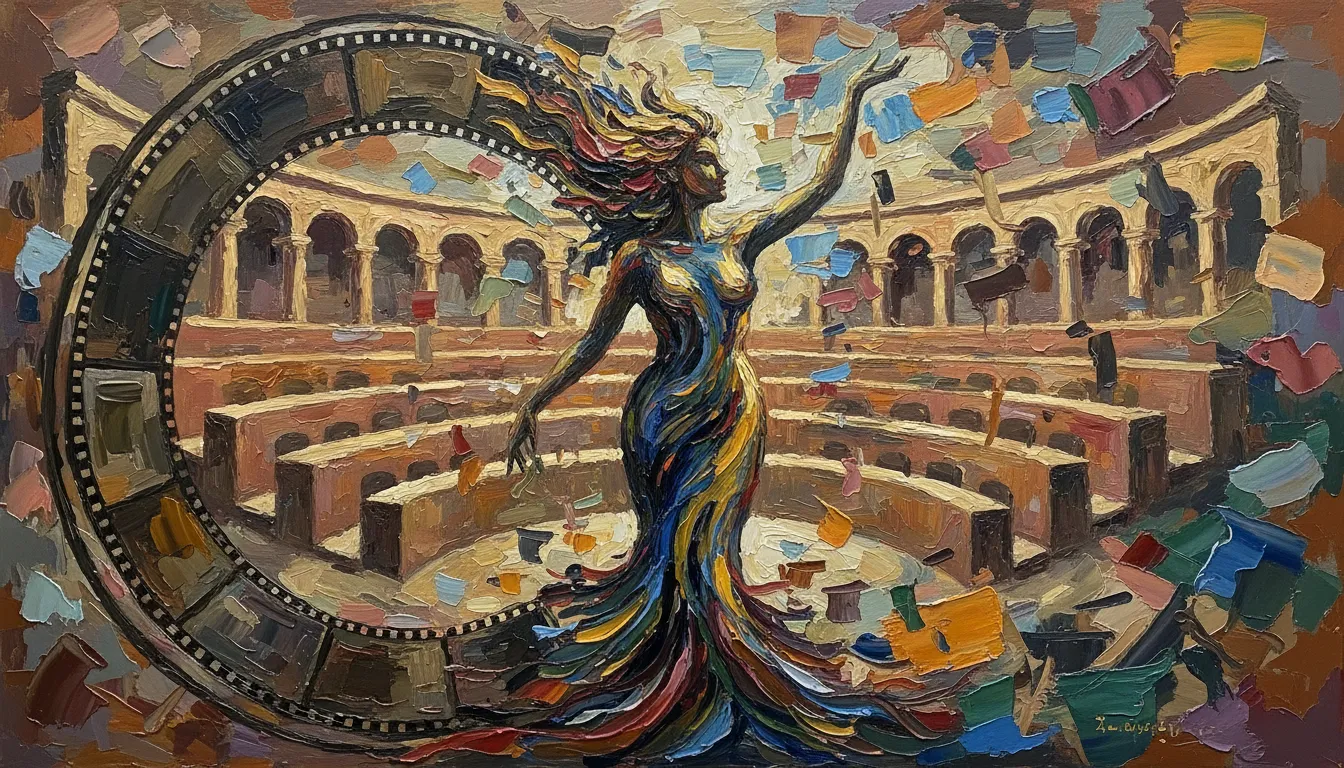
Marcella Di Folco was one of the most important and revolutionary figures in the history of the transgender rights movement in Italy and worldwide. An actress discovered by Federico Fellini, a tireless activist, and a visionary politician: her life spanned and shaped fifty years of struggles for the recognition of the dignity and rights of transgender people [1][2]. In 1995, when she was elected city councillor in Bologna, she not only became the first trans woman to hold an elected public office in Italy but was the first in the world [1] — a record that Italy and Bologna can claim with pride.
Early years and the discovery of cinema
Marcella Di Folco was born in Rome on November 5, 1943, in the midst of World War II [1]. She grew up in a middle-class Roman family and graduated from a scientific secondary school, demonstrating from a young age the keen intelligence and intellectual curiosity that would accompany her throughout her life.
In the late 1960s, her life took an unexpected turn when she caught the attention of the great director Federico Fellini [1][2]. At the time, before her transition, Marcella began collaborating with the master of Italian cinema, appearing in several of his films. Her first appearance was in Fellini Satyricon (1969), the visionary and dreamlike film inspired by Petronius’s work. She subsequently appeared in Roma (1972), the film-fresco about the eternal city, in Amarcord (1973), the Oscar-winning masterpiece set in 1930s Rimini, and in City of Women (1980), a reflection on femininity and feminism through Fellini’s surreal lens [1].
Her collaboration with Fellini was not her only film experience. She also worked with Roberto Rossellini, one of the fathers of Italian neorealism, and with directors such as Dino Risi and Bruno Corbucci, participating in that era of Italian cinema — between commedia all’italiana and auteur experimentation — that would leave an indelible mark on world culture [1][2].
The journey to Casablanca: the transition
In the 1970s, Marcella made the decision that would radically change her life: to begin the transition process. But in an Italy where trans people had no legal existence and where gender-affirming procedures were impossible to obtain, undertaking this journey meant going abroad [3][4].
Like thousands of other European trans people, Marcella traveled to Casablanca, Morocco, which since the 1950s had become the best-known destination for surgical reassignment procedures [6]. Here operated the French gynecologist Georges Burou, a pioneer of vaginoplasty techniques who had welcomed hundreds of trans people from across Europe at his Clinique du Parc [6].
Marcella completed her surgical journey in Casablanca in 1980, two years before Italian law finally recognized the right to legal sex reclassification [1]. The trip to Casablanca was not only costly — many trans people had to sell everything they owned to afford it — but also medically risky [6]. In the 1960s and 1970s, surgical techniques were still being refined and postoperative complications were frequent. However, for those who felt their identity did not match the body assigned at birth, that journey represented the only chance to live authentically.
Upon returning to Italy, Marcella faced all the contradictions of a country that still did not legally recognize trans people [3]. Her documents continued to indicate a male gender, while she lived as a woman. Every interaction with the bureaucracy — from renting a home to opening a bank account, from looking for work to police checks — became a potential moment of exposure, discrimination, and humiliation.
MIT and the battle for Law 164
Encounter with the movement
The personal experience of transition and the awareness of the daily difficulties trans people faced drove Marcella toward activism. In the late 1970s, she came into contact with the nascent MIT (Movimento Italiano Transessuali, later Movimento Identita Trans), founded between 1979 and 1980 by activists such as Pina Bonanno in collaboration with the Radical Party and figures like Marco Pannella [4][8].
MIT was formed at a crucial moment: the debate over the need for legislation recognizing the rights of trans people was finally emerging in Italy’s political landscape, but resistance was enormous. Trans people lived in a condition of total social marginality, many forced into sex work because they were excluded from any other form of employment [4]. Police used Fascist-era laws on “masquerading” — Article 85 of the Public Safety Code — to systematically arrest and fine trans women who wore women’s clothing [3][4].
The Lido di Milano protest
On July 4, 1980, MIT organized what is considered the first public protest for trans rights in Italy [4]. A group of trans women, including some of the movement’s founders, entered the public swimming pool at piazzale Lotto in Milan (the Lido di Milano) wearing bikinis. Then they removed their tops, remaining bare-chested.
When the authorities tried to make them cover up, their response was as simple as it was devastating: “We can only wear the bottom piece of the swimsuit because according to our documents we are considered men” [4]. The provocation highlighted the legal absurdity in which trans people were forced to live: recognized as men by the state, but living and perceived as women in daily reality.
The protest ended with all participants taken to the police station, charged with public indecency. But it gained wide media coverage — the Corriere della Sera reported the news the following day — and helped bring the issue of gender identity to public attention.
The victory: Law 164/1982
MIT’s activism, testimony before the European Parliament in Strasbourg, and political awareness-raising work eventually led to a historic result. On April 14, 1982, Law 164 was enacted, signed by President of the Republic Sandro Pertini and published in the Official Gazette on April 19 [3].
The law, titled “Provisions concerning the rectification of sex attribution,” recognized for the first time in Italy the right of trans people to modify their civil records to reflect their gender identity [3]. Italy thus became the third European country to adopt specific legislation, after Sweden (1972) and West Germany (1980) [3].
Law 164 represented a watershed moment for Italian trans people. After decades of legal nonexistence, criminalization, and marginalization, the state finally recognized their dignity and their right to exist. For those like Marcella who had lived through the dark years before, that law meant the concrete possibility of a normal life: documents consistent with one’s identity, access to regular employment, and an end to daily humiliations.
The MIT presidency: 1988-2010
In 1988, Marcella Di Folco assumed the presidency of MIT, a position she would hold until her death in 2010 — twenty-two years during which she became the public face and most authoritative voice of the Italian trans movement [1][5][8].
Under her leadership, MIT transformed from a protest movement into a structured organization, capable of engaging with institutions, the healthcare system, and the political world [5]. Marcella brought to the movement not only the passion of an activist but also competence, strategic intelligence, and the ability to dialogue with diverse interlocutors — from doctors to judges, from politicians to journalists.
The Bologna clinic: a revolution
One of Marcella’s most significant contributions was the founding, in 1994, of the world’s first gender identity clinic managed by trans people [2][5]. Located in Bologna, at the Casa della Salute in the San Vitale neighborhood, the clinic operated in collaboration with local institutions and healthcare professionals.
The idea was revolutionary: until then, trans people had always been objects of medical study, observed and evaluated by cisgender professionals who often did not fully understand their experiences. Marcella’s clinic reversed this dynamic: trans people were no longer just patients but active protagonists of their own care journey and lives.
The clinic provided psychological support, healthcare guidance, accompaniment through medical transition pathways, and legal assistance. But above all, it offered a safe space where trans people could be understood, welcomed, and supported by those who had lived similar experiences. Marcella’s approach was based on the principle of self-determination: trans people should be at the center of decisions concerning their own lives and bodies.
The Bologna clinic model subsequently influenced the creation of similar facilities in other Italian cities and helped change the healthcare system’s approach to trans people, gradually shifting from a purely psychiatric paradigm to one more holistic and respectful of personal self-determination.
Vice President of ONIG
From 1997, Marcella also held the position of Vice President of ONIG (National Observatory on Gender Identity), a body that monitored and promoted the rights of trans people in Italy, collaborating with institutions, academia, and the healthcare system [1].
In this role, Marcella helped develop guidelines for the medical treatment of trans people, train healthcare professionals, and raise institutional awareness of the specific needs of the transgender community. Her work was fundamental to the progressive humanization of the transition process in Italy, which in the 1980s and 1990s was still characterized by lengthy psychiatric evaluations, stigmatization, and bureaucratic obstacles of every kind.
1995: the first in the world
On November 27, 1995, Marcella Di Folco was elected city councillor of Bologna on the Green Party ticket [1][2]. It was not just a historic event for Italy: it was a world first.
Marcella became the first openly trans woman to be elected to public office in the world [1]. There are no documented precedents of trans people holding elected positions before her. Other celebrated cases — such as that of Georgina Beyer in New Zealand — came later: Beyer was elected mayor of Carterton in 1995, but several months after Marcella, and became a member of the New Zealand Parliament only in 1999 [1].
The political significance of the election
Marcella’s election represented a symbolic and political breakthrough of enormous magnitude. In an era when trans people were still widely stigmatized, excluded from public life, and associated almost exclusively with social marginality and sex work, a trans woman was chosen by the citizens of a major Italian city to represent them in the institutions.
Bologna, a city with a long tradition of progressive government and left-wing administrations, demonstrated a capacity for social innovation that anticipated many other contexts by decades. The Green Party, then a growing political force attentive to civil rights and minority issues, deserved credit for nominating Marcella, recognizing her skills, experience, and credibility.
Council activities
As a city councillor, Marcella focused on social policy, civil rights, healthcare, and, naturally, the rights of LGBTQ+ people. She brought the concerns of the trans movement into local institutions and helped make Bologna a city at the forefront of inclusion policies.
Her work was characterized by concreteness and pragmatism. Marcella was not interested in ideological proclamations for their own sake: she wanted tangible results that would improve people’s lives. She fought for access to healthcare services, inclusive housing policies, the fight against workplace discrimination, and support for the most vulnerable trans people.
Her presence on the city council normalized the figure of the trans person in the public imagination. She was no longer just “the trans person” — she was Councillor Di Folco, an elected representative chosen by citizens, with specific competencies and a democratic mandate. This symbolic transformation had an impact that extended well beyond Bologna.
A life of political and social engagement
Beyond her role as city councillor and MIT president, Marcella was the protagonist of numerous other initiatives over the years.
International collaborations and networks
Over the years, Marcella built a dense network of collaborations with international trans organizations, participating in conferences, exchanges of experience, and transnational campaigns for the rights of transgender people. Her work helped position Italy, and particularly Bologna, as a reference point for the European trans movement.
Education and awareness-raising
A significant part of her commitment was dedicated to education: she met with students, healthcare workers, law enforcement officers, journalists, and politicians. She brought her testimony to schools, universities, and scientific conferences. Her approach was always the same: telling the reality of trans people without rhetoric, with honesty and clarity, breaking down prejudice and misinformation.
Many doctors, psychologists, and social workers who today work with trans people in Italy received their first serious training on the subject thanks to Marcella and MIT. Her ability to communicate, combined with the credibility derived from personal experience and political engagement, made her educational contribution irreplaceable.
Death and legacy
Marcella Di Folco died on May 29, 2010, in Bologna, after a long illness. She was 66 years old and had dedicated over thirty years of her life to activism for the rights of trans people [1][2].
Her death was mourned by the entire Italian LGBTQ+ community and by the city of Bologna, which lost a reference figure and an engaged citizen. The funeral was attended by hundreds of people: activists, politicians, and ordinary citizens who had known and esteemed her.
Piazzale Marcella Di Folco: the first public recognition
Eleven years after her death, on September 23, 2021, the Municipality of Bologna paid her an extraordinary tribute. A green area in the Navile neighborhood, in the Corticella area, was named after her, becoming Piazzale Marcella Di Folco [7].
This was not just an act of local recognition: it was the first naming of a public space after a trans person in Italy [7]. In a country where squares, streets, and gardens bear the names of saints, military leaders, politicians, and writers — all strictly cisgender — the naming of a public space after a trans woman represented a political gesture of enormous symbolic significance.
The piazzale is located in the area where the clinic Marcella had founded once operated, thus creating a physical link between the place and the memory of her work [7]. The naming was accompanied by a plaque that recalls her role as an “activist for the rights of transgender people, first trans woman elected to a legislative assembly, city councillor of Bologna from 1995 to 1999.”
The legacy in MIT
After Marcella’s death, MIT continued its work, renaming itself in 2017 as Movimento Identita Trans to reflect a broader and more inclusive conception of gender identity, one that goes beyond the medical category of “transsexualism” and embraces the plurality of transgender experiences [5][8].
The organization continues to operate throughout Italy, providing legal support, healthcare assistance, education, and political advocacy. The organizational model, the approach based on self-determination, and the political vision of MIT still bear the mark of Marcella’s long work to this day.
The historical significance of Marcella Di Folco
A pioneer on multiple fronts
Marcella Di Folco was a pioneer in at least three domains:
Cinema and culture: as an actress in Fellini’s films, she contributed to representing the complexity of gender identity in Italian cinema, at a time when the visibility of trans people was practically nonexistent [1].
Political activism: as president of MIT, she was a protagonist of the battle for Law 164 and the evolution of the Italian trans movement from a marginalized group to a recognized political force [5][8].
Institutional politics: as a city councillor of Bologna, she paved the way for the participation of trans people in public and democratic life, demonstrating that gender identity is not an obstacle to political representation [1][2].
The courage of authenticity
In an Italy where being trans meant risking arrest, violence, and total marginalization, Marcella chose to live authentically and, even more courageously, to make her identity public [4]. She did not seek the silent passing — the possibility of living as a woman without revealing her history — but made her experience a political and pedagogical tool.
This courage came at an enormous personal cost. Marcella faced discrimination, verbal abuse, and ostracism. But it also made it possible for others to live more freely. Every right that trans people enjoy in Italy today — from legal sex reclassification to access to care, from workplace protections to public visibility — was built in part through her commitment.
A model of pragmatic activism
Marcella’s approach to activism was characterized by pragmatism and concreteness. She did not limit herself to denunciation and protest — though these were necessary — but built alternatives, institutions, and support networks. The Bologna clinic, her council work, the training of professionals: these were all examples of an activism that was not content to criticize the status quo but built something new.
This model of activism — based on collaboration with institutions, technical expertise, and the construction of concrete services — was fundamental to the evolution of the trans movement in Italy and remains a reference point to this day.
Conclusion
Marcella Di Folco lived through some of the most significant transformations in contemporary Italian history. Born during World War II, she lived through the years of the economic boom, the youth protests, feminism, and the era of civil rights. She saw Italy go from a country where trans people were criminalized and invisible to a country where — despite contradictions and resistance — legal recognition and growing public awareness exist.
Her life demonstrates that rights are not granted but won. That visibility is not a given but the result of courageous choices. That institutions can change when the people most directly affected organize, fight, and propose concrete alternatives.
The piazzale that bears her name in Bologna is not just a tribute to a deserving person. It is an acknowledgment that trans people have always been part of Italian history — even when the state pretended they did not exist. It is a reminder that rights are fragile and must be defended. It is an invitation to continue the struggle that Marcella waged with intelligence, courage, and generosity throughout her life.
In an era when the rights of trans people are once again under attack in many countries around the world, remembering Marcella Di Folco means remembering that progress is not irreversible, but that every achievement can be defended and expanded if there exists an organized community, determined and aware of its own history.
Frequently asked questions
Who was Marcella Di Folco?
Marcella Di Folco (1943-2010) was an Italian actress, activist, and politician. She was the first trans woman in the world to be elected to public office (city councillor of Bologna, 1995) and the longtime president of MIT (Movimento Identita Trans).
Which films did Marcella Di Folco appear in?
She appeared in several Federico Fellini films, including Amarcord (1973), Fellini Satyricon (1969), Roma (1972), and City of Women (1980). She also worked with Roberto Rossellini, Dino Risi, and Bruno Corbucci.
When did Marcella Di Folco become a city councillor?
In 1995, elected on the Green Party ticket in Bologna. She was the first openly trans woman to hold an elected political office in the world, preceding any other documented case by over a decade.
What did Marcella Di Folco found in Bologna?
In 1994, she founded the world's first gender identity clinic managed by trans people, in collaboration with institutions and healthcare professionals. The clinic operated at the Casa della Salute in the San Vitale neighborhood.
Further reading
- Film Il Casanova di Federico Fellini (1976)