Le favolose: the film about Neapolitan trans women of the 1980s
A film that gives voice to a forgotten community
In Italian cinema, the stories of transgender people have long been ignored, marginalized, or told through the gaze of those who did not live them. “Le favolose,” directed by Roberta Torre and premiered at the Rome Film Fest in 2022 [5], breaks this silence with a courageous and necessary work: a film that tells the story of Neapolitan trans women of the 1980s, the so-called “femminielli,” through their own voices.
The film is not a simple exercise in memory. It is an act of restitution. It restores dignity, complexity, and visibility to a community that endured decades of discrimination yet managed to build bonds of solidarity, creativity, and resistance in one of Italy’s most challenging urban settings.
The plot: intertwined lives in the alleys of Naples
“Le favolose” does not follow a traditional linear plot. The film is constructed as a mosaic of interwoven stories, a chorus of female voices recounting the daily life of trans women in the working-class neighborhoods of Naples in the 1980s [1][6].
At the center of the narrative are relationships: the deep and sometimes conflicting friendships between the protagonists, romances with men who often sought them out in secret, complicated connections with their families of origin, and the neighborhood solidarity that coexisted with prejudice. The film shows celebrations, rituals, moments of collective joy, but also violence, marginalization, and the poverty that marked their lives.
Roberta Torre chose to involve real members of the Neapolitan trans community, women who lived through those years and who bring their authentic experiences to the screen [6]. This approach, blending documentary and fiction, gives the film an intensity and truth that an entirely scripted production could never have achieved.
The protagonists recount how they found one another, protected each other, shared clothes and makeup, and helped each other through difficult times. In an era when Italian institutions did not recognize their identity and society pushed them to the margins [8], these women built a network of mutual support that was, in many cases, the difference between survival and annihilation.
The femminielli: a centuries-old tradition
To fully understand “Le favolose,” one must know the tradition of the Neapolitan femminielli, a cultural phenomenon unique in the Italian and European landscape [4].
The term “femminiello” refers, in Neapolitan popular tradition, to a person assigned male at birth who expresses a feminine identity and social role [4]. The presence of femminielli in Neapolitan culture has been documented for centuries: as early as the 18th and 19th centuries, foreign chroniclers and travelers described with amazement the relative visibility of these figures in the city’s working-class neighborhoods [7].
Unlike the rest of Italy, where trans people lived in near-total secrecy [8], in Naples the femminielli occupied a recognized, if ambiguous and contradictory, social space. Neapolitan popular culture attributed almost magical powers to them: tradition associated them with good fortune, fertility, and protection against the evil eye [7]. The “figliata dei femminielli,” a carnival ceremony in which a femminiello simulated childbirth, was a neighborhood event celebrated with collective participation [4][7].
This relative acceptance should not be idealized. The femminielli still faced discrimination, violence, and economic marginalization. Their “tolerance” was often conditional on subordination: they were accepted as long as they stayed in the role society assigned them, confined to working-class neighborhoods, far from bourgeois respectability. But compared to the conditions of trans people in the rest of Italy — especially before Law 164 of 1982 — the Neapolitan reality at least offered a space of visible existence [8].
Naples in the 1980s: an explosive context
The 1980s in Naples were a decade of extreme contradictions. The city was experiencing a profound crisis: the Irpinia earthquake of 1980 had devastated entire neighborhoods, the Camorra was consolidating its control over the territory, unemployment and poverty were rampant, and the heroin epidemic was decimating a generation of young people.
In this context, Neapolitan trans women found themselves at the intersection of multiple vulnerabilities. Many of them worked in sex work, often the only accessible source of income. Violence was a constant presence: from clients, from organized crime, from law enforcement. The AIDS epidemic, which hit Italy in the second half of the decade, added another layer of danger and stigma.
“Le favolose” does not hide this reality, but refuses to reduce its protagonists to the role of victims [6]. The film shows suffering, but also joy, creativity, humor, and the ability to find beauty and meaning even in the most difficult circumstances. The protagonists laugh, dance, argue, reconcile, and dream. They are complete people, not symbols of oppression.
Roberta Torre: a director between documentary and fiction
Roberta Torre, a Milanese director known for her experimental approach and her ability to tell the stories of southern Italian realities with sensitivity and respect [3], brought her characteristic style to “Le favolose”: the fusion of documentary and fiction, of reality and representation.
Torre had already demonstrated this skill in previous works, where she had told complex social stories without falling into rhetoric or paternalism [3]. With “Le favolose,” the challenge was even more delicate: to tell the story of a marginalized community without appropriating it, to give space to the protagonists’ voices without renouncing her authorial vision.
The solution the director found was to build the film around real testimonies, using lived stories as narrative material and involving the protagonists not only as performers but as co-creators of the work [6]. This collaborative process, similar to the one adopted by Sean Baker in “Tangerine,” ensures an authenticity that permeates every scene of the film.
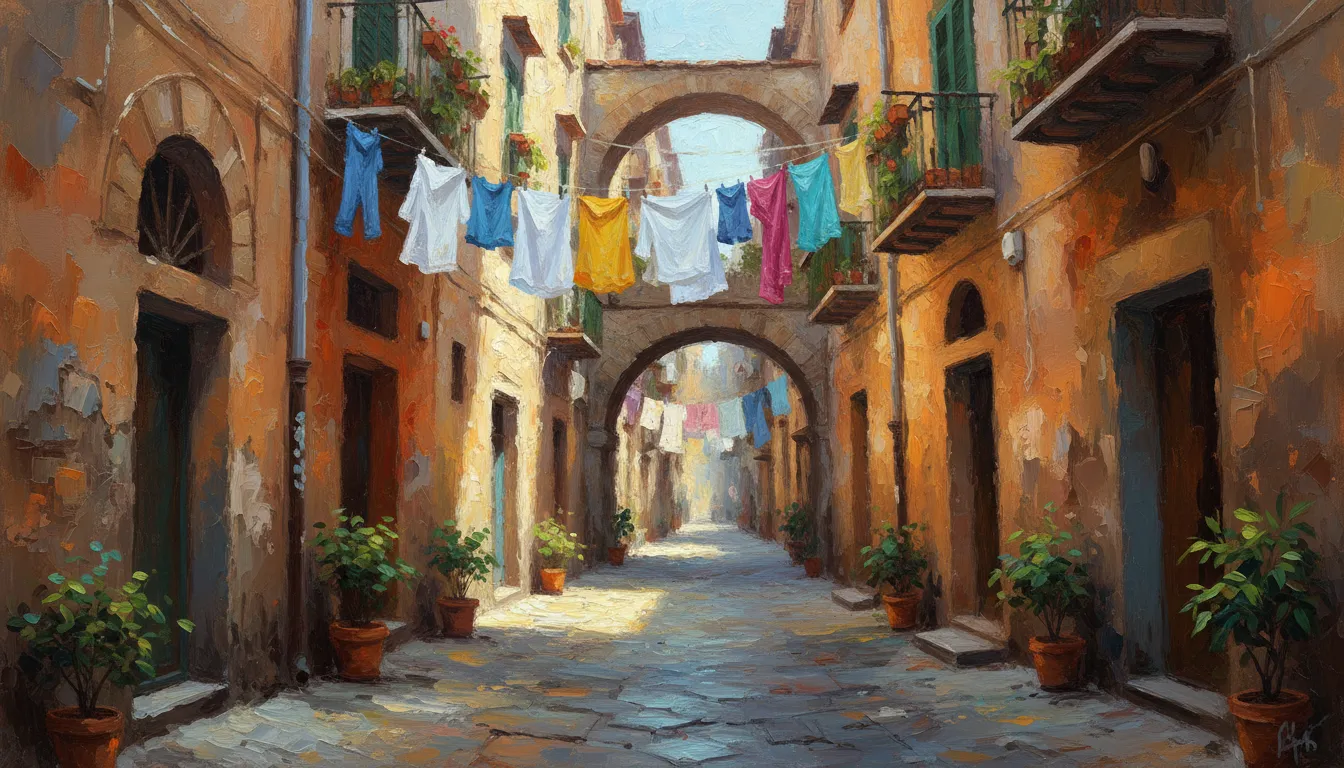
The film’s cinematography captures Naples with a gaze that avoids both the picturesque and miserabilism. The alleys, the basement apartments, the plazas of the working-class neighborhoods are portrayed as spaces of lived life, not as exotic backdrops. Mediterranean light, intense colors, and urban chaos become an integral part of the narrative, creating an atmosphere that is both realistic and poetic.
Trans representation in Italian cinema
“Le favolose” enters an Italian cinematic context where the representation of transgender people has historically been problematic. For decades, Italian cinema relegated trans people to marginal roles: background sex workers in comedies, tragic figures in social dramas, objects of curiosity or ridicule.
Some significant exceptions exist. “La bocca del lupo” (2009) by Pietro Marcello told the love story between an ex-convict and a trans woman in Genoa with extraordinary sensitivity. Various documentaries have explored the lives of Italian trans people. But a film that placed trans women at the center of the narrative as absolute protagonists, with their own voice and perspective, was a novelty in the Italian landscape.
In this sense, “Le favolose” represents an important step forward for trans visibility in Italian cinema. It is not a film “about” trans people told from the outside, but a film “by” trans people, built with and through their experiences [6]. This distinction, seemingly subtle, is in fact fundamental: it determines who has the power to tell stories and, consequently, which stories get told.
The Rome Film Fest and reception
“Le favolose” was presented at the Rome Film Fest in 2022, in the Alice nella citta section [5]. The presentation in such a prestigious context gave the film significant visibility, contributing to the debate on the situation of trans people in Italy.
Critical reception was generally positive [2]. Reviewers appreciated the film’s authenticity, the strength of the protagonists, and Roberta Torre’s ability to tell a complex reality without simplification. Some critics highlighted how the film manages to avoid the most common pitfalls of trans representation: voyeurism, paternalism, and the reduction of trans people to their transition or their bodies.
Audiences reacted with emotion and curiosity. For many Italian viewers, “Le favolose” was their first encounter with the history of the femminielli and the reality of Neapolitan trans women, a story that school textbooks and mainstream media have largely ignored.
Why this film matters today
“Le favolose” arrives at a crucial moment for transgender people in Italy. The debate on trans rights in the country is still open and often harsh, marked by misinformation and prejudice. In this context, a film that tells the real lives of trans women with humanity and respect has a value that extends beyond cinema.
The film reminds us that transgender people are not a recent phenomenon or a “trend” imported from abroad, as certain public narratives would have us believe. In Naples, the femminielli have existed for centuries, an integral part of the city’s social and cultural fabric [4][7]. Their history is Italian history, European history, human history.
“Le favolose” also reminds us that memory is a political act. Telling the stories of trans women of the 1980s — many of whom are no longer alive — means affirming that their lives mattered, that their experiences deserve to be known, that their daily resistance was a fundamental contribution to the history of the trans movement in Italy.
For anyone who wants to understand what it meant to be a trans person in Italy before and after Law 164 of 1982 [8], “Le favolose” is an essential starting point. It does not replace historical research or direct dialogue with trans people, but it offers something that only cinema can give: the possibility of seeing the world through someone else’s eyes.
Where to watch the film
“Le favolose” is available in Italy through various digital distribution platforms. For updated information on availability, it is advisable to check the main Italian streaming services or the film’s official distribution website.
Want to learn more about the history of transgender people? Subscribe to the Traidue newsletter to receive new articles, resources, and updates about the LGBTQIA+ community.
Frequently asked questions
What is the film Le favolose about?
Le favolose (2022) tells the story of a group of Neapolitan trans women in the 1980s, connected to the femminielli tradition. Directed by Roberta Torre, the film blends documentary and fiction to portray the life of the trans community in Naples' working-class neighborhoods: their friendships, their loves, the discrimination they faced, and their extraordinary resilience.
Who are the Neapolitan femminielli?
The femminielli are people assigned male at birth who express a feminine identity, a figure rooted in Neapolitan popular tradition for centuries. Unlike other parts of Italy, in Naples the femminielli enjoyed a form of social acceptance tied to neighborhood culture, superstition, and popular religious traditions, although they still faced discrimination and marginalization.
Is Le favolose a documentary or a fiction film?
Le favolose is a hybrid work that blends documentary and fiction. Roberta Torre involved real members of the Neapolitan trans community, having them tell their true stories through a cinematic narrative structure. This approach gives the film the authenticity of documentary and the emotional power of narrative cinema.
Where was Le favolose premiered?
Le favolose premiered at the Rome Film Fest in 2022, in the Alice nella citta section. The film received attention for its ability to tell a little-known reality of the Italian landscape and for the direct involvement of the real protagonists in the production.
Further reading
- Film Le favolose (2022)
- Film Ferrante Fever (documentary) (2017)
- Film La bocca del lupo (Pietro Marcello) (2009)
- Documentary Napoli trans (Monica Ferraro) (2002)