Euphoria and Jules Vaughn: a trans representation that changed TV
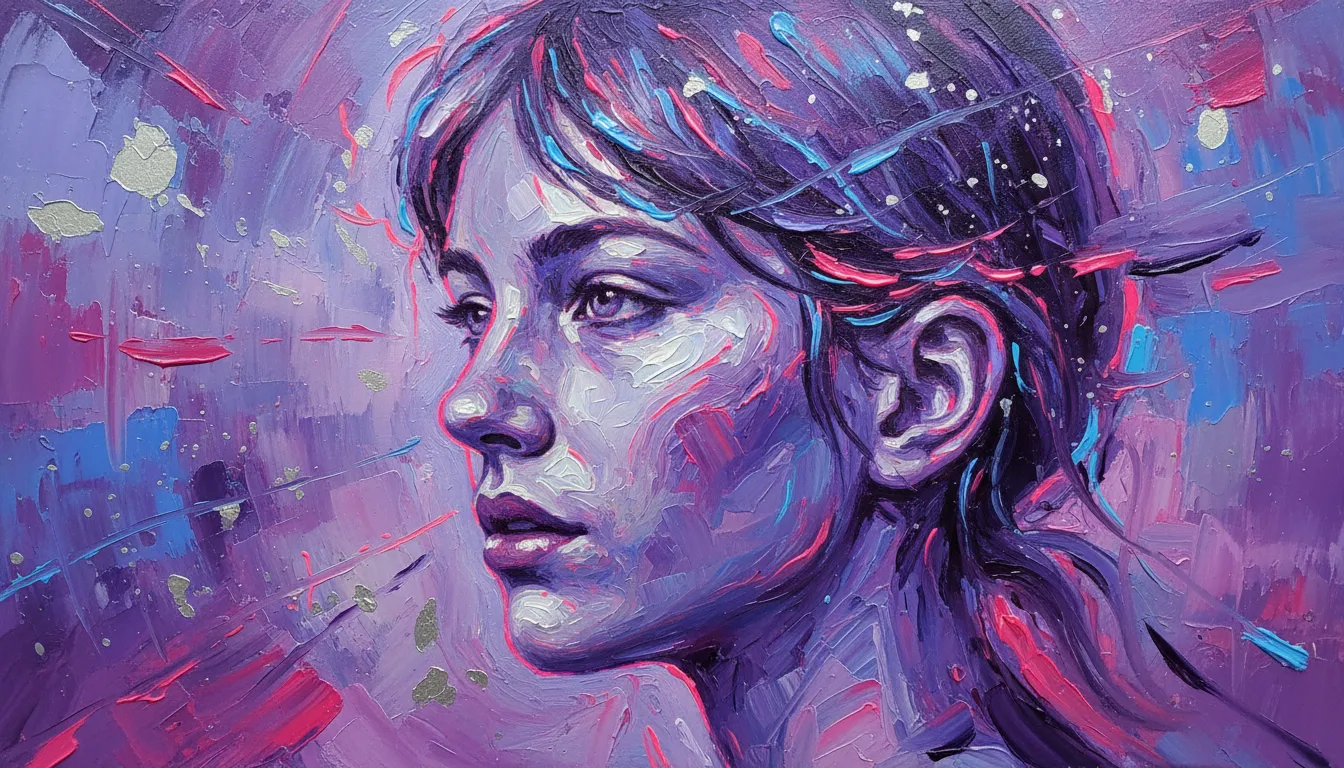
In the contemporary television landscape, few series have managed to speak to Generation Z with the intensity and complexity of Euphoria. Created by Sam Levinson for HBO and airing since 2019 [1], the series has addressed themes such as addiction, sexuality, identity, and mental health with a radically new visual and narrative language. At the center of this universe, the character of Jules Vaughn, played by trans actress Hunter Schafer, represents a turning point in the history of transgender representation on television [3].
Hunter Schafer: model, activist, actress
To understand the character of Jules, it is useful to know who brought her to life. Hunter Schafer was born in 1998 in New Jersey and grew up in Raleigh, North Carolina [7]. Even before becoming an actress, Schafer was already a public figure: at 16, she had joined the fight against House Bill 2 (HB2), the controversial North Carolina law that banned transgender people from using public restrooms corresponding to their gender identity [7].
Schafer participated in demonstrations, spoke publicly about her experience as a trans girl, and became a visible face of resistance against discriminatory legislation. After high school, she pursued a career in fashion, walking for brands like Dior, Miu Miu, Versace, and Marc Jacobs [7]. Her androgynous beauty and intense gaze caught the attention of Sam Levinson, who cast her as Jules without any acting experience [2].
This choice proved decisive. Schafer brought not only natural talent to the character, but an authenticity that no cisgender actor could have replicated. As she stated in several interviews, many of Jules’s experiences — the fear, the search for validation, the desire to be seen as simply a girl — were her own [2].
Jules Vaughn: a character beyond the “trans story”
The new girl
Jules is introduced in the first season as a girl who moves with her father to the town where the other protagonists live. From the very first scenes, the audience understands that Jules is trans, but the series does not dwell on didactic explanations. There is no “reveal” scene, no moment where Jules must justify her existence. She is simply a girl — with everything that entails for a teenager [3].
This approach was revolutionary. For decades, trans characters on television had been defined almost exclusively by their transsexuality: stories of suffering, of transition, of rejection [8]. Jules exists in a different space. Her main conflicts are not about being trans, but about love, friendship, emotional dependency, sexuality, and the search for her own identity beyond others’ expectations [3].
The relationship with Rue
The emotional heart of Euphoria is the relationship between Jules and Rue Bennett (Zendaya), the protagonist who struggles with opioid addiction [1]. Their bond is complex: it begins as an intense friendship, evolves into something romantic, and becomes complicated when both of their dependencies — Rue’s on drugs, Jules’s on validation — come into conflict.
The series shows with delicacy and honesty how two people who love each other deeply can also hurt each other. Rue clings to Jules as a substitute for drugs, while Jules, terrified by the idea of being responsible for someone else’s sobriety, oscillates between the desire to stay and the need to flee.
The search for validation
One of the boldest aspects of Jules’s writing is the exploration of her relationship with femininity and male validation [3]. In the first season, Jules seeks confirmation of her identity through sexual encounters with older men, met on dating apps. The series does not judge these behaviors but shows them as the result of a social system that teaches women — and trans women in particular — that their worth depends on the male gaze.
This theme becomes explicit in the special episode dedicated to Jules, aired between the first and second seasons.
The special episode: a narrative turning point
In January 2021, HBO aired a special episode entirely dedicated to Jules, co-written by Hunter Schafer and Sam Levinson [5]. The episode, titled “F**k Anyone Who’s Not a Sea Blob,” is a conversation between Jules and her therapist that transforms into a deep exploration of identity.
In this conversation, Jules reflects on the meaning of femininity, her relationship with her body, the desire to be desired, and the fear of losing herself in the attempt to conform to others’ expectations. One of the most powerful scenes sees Jules questioning her relationship with traditional femininity, wondering whether her desire to be “a girl” is authentic or whether it is the product of a society that taught her that the way to be validated as a woman is to adhere to a precise model [4].
This reflection was described by critics as one of the most radical moments in trans television [4]. For the first time, a trans character was not merely defending their identity or explaining “what it means to be trans” to the cisgender audience. Jules was critically interrogating the very structures of gender, bringing the discourse to a level of complexity rarely achieved on television.
Schafer recounted that the episode was born from her personal diaries, which she shared with Levinson as a basis for the script [5]. The result is a piece of television of disarming intimacy, which speaks to anyone who has ever questioned their own identity.
The impact on young people
Euphoria became a cultural phenomenon for Generation Z, with millions of viewers between 16 and 25 years old [6]. For many young people, Jules was the first trans representation they encountered in a narrative context that spoke their language. Not a character in an “issue” drama, not an educational documentary, but a girl their age living their same emotional experiences.
The impact was significant. According to GLAAD, Euphoria contributed to increasing understanding and empathy toward trans people among young audiences [8]. Many trans and nonbinary individuals said they recognized themselves in Jules’s journey, finding in the series a representation that made them feel less alone.
At the same time, the series allowed many cisgender young people to see a trans girl as a complete person — with desires, fears, flaws, and dreams — and not as an abstract category [6]. This normalization, achieved without captions or paternalistic tones, is perhaps Euphoria’s most important contribution to the cause of representation.
The criticisms: an imperfect series
Euphoria is not free from criticism, including on the trans representation front. In the first season, some scenes showing Jules in sexual situations with adult men were judged problematic: while intending to portray a reality that many trans girls experience, the risk of sexualizing a teenage character was raised by multiple sources [3].
Additionally, the series has been criticized for its explicit depiction of drug use and violence among teenagers, with some educators and parents expressing concern about its influence on a young audience. Hunter Schafer herself, in some interviews, spoke about the tension between the desire to tell true stories and the risk of normalizing dangerous behaviors [2].
It should also be noted that Jules is one of very few trans characters in Euphoria, in a series with a predominantly cisgender cast. Trans representation in the series thus remains concentrated in a single experience — that of a young, white, attractive trans woman — without exploring the diversity of transgender experiences [8].
Hunter Schafer’s role in cultural change
Beyond the character of Jules, Hunter Schafer has become one of the most visible figures in contemporary youth culture [7]. Her career in fashion, her visual art, her activism, and her role in Euphoria have made her a model for a generation that rejects rigid categories and embraces authenticity.
After Euphoria, Schafer continued working in film, appearing in The Hunger Games: The Ballad of Songbirds and Snakes (2023) in a role not specifically written for a trans actress. This shift — from “trans actress playing trans characters” to “actress playing any role” — is symbolic of a broader cultural change.
A character that endures
Jules Vaughn is not a perfect character, and she does not claim to represent all trans people. But in her complexity, in her contradictions, in her search for a femininity that is truly hers and not a performance for others’ gaze, Jules offered millions of viewers something rare: a trans girl who is simply a girl, with everything that entails. And for television, that was an enormous step.
Frequently asked questions
Who is Jules in Euphoria?
Jules Vaughn is a character in the HBO series Euphoria, played by trans actress and model Hunter Schafer. She is a transgender teenage girl who moves to a new town and forms a deep bond with the protagonist Rue. The character is known for her complexity: she is not defined by her trans identity, but it is an integral part of her story.
Why is Jules's representation considered important?
Jules is one of the rare trans characters on TV whose story does not revolve entirely around transition or the suffering of being trans. The character deals with universal themes like love, friendship, self-discovery, and mental health, while her trans identity is treated as a natural aspect of who she is, not a problem to be solved.
Who is Hunter Schafer?
Hunter Schafer is an American trans actress and model born in 1998. Before Euphoria, she was already known as a model and activist: as a teenager, she fought against House Bill 2 in North Carolina, a discriminatory law on public bathroom use by transgender people. Her role in Euphoria made her one of the most well-known young trans actresses in the world.
Has Euphoria received criticism?
Yes. The series has been criticized for its explicit depiction of drugs and sexuality among teenagers, and some cast members have expressed discomfort with overly provocative scenes. On the trans representation front, some observers have noted that the sexualization of Jules in some first-season scenes reproduces problematic patterns.
Further reading
- TV Series Euphoria (2019)
- Documentary Disclosure: Trans Lives on Screen (2020)
- TV Series Pose (2018)