Bathroom bills: laws that ban trans people from restrooms
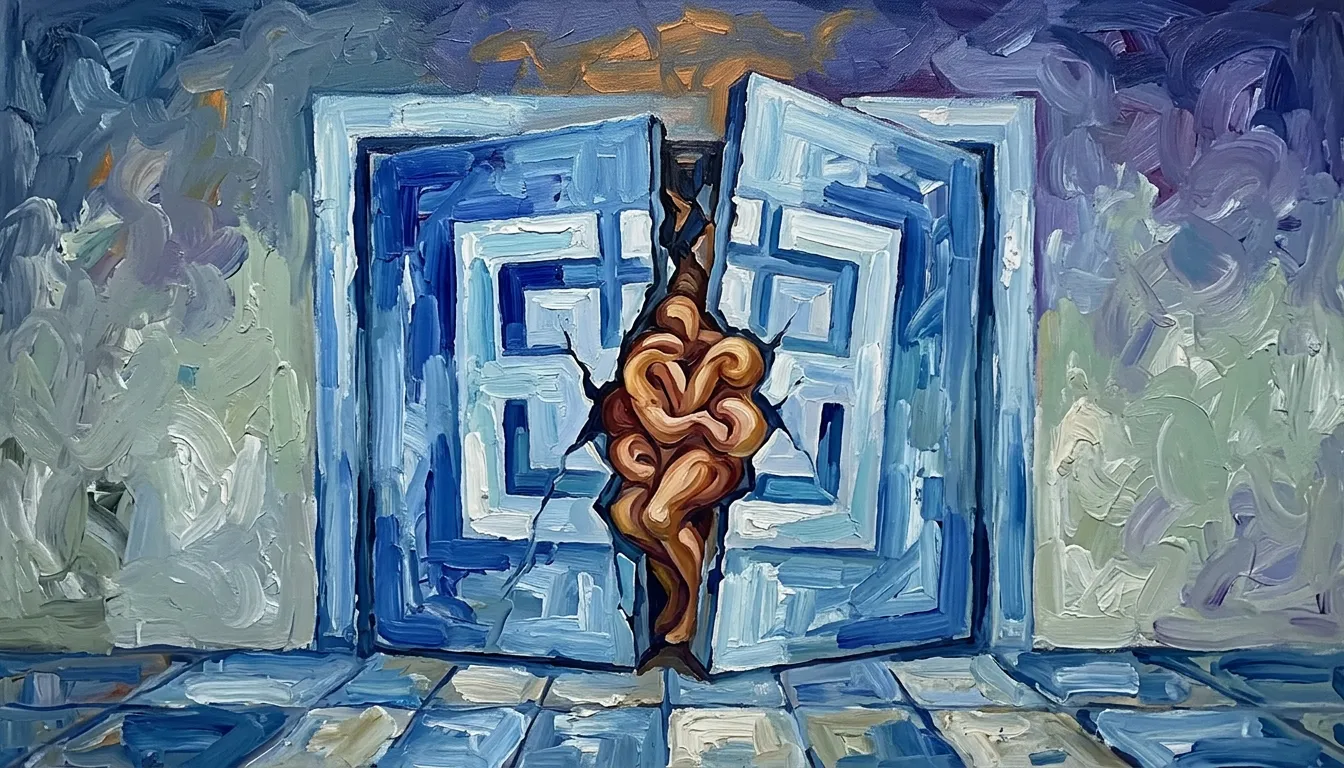
“Bathroom bills” are laws that require people to use public restrooms corresponding to their sex assigned at birth. In practice, they prevent transgender people from accessing restrooms consistent with their gender identity. The term emerged in American political discourse beginning in 2016, when North Carolina passed the first such law on a statewide scale. As of 2025, at least 20 U.S. states have active laws restricting restroom access for transgender people [1][8].
What bathroom bills are
A bathroom bill is a law that defines “sex” as biological sex registered at birth and then requires that all sex-separated spaces — restrooms, locker rooms, showers — follow this definition [3]. The legal mechanism is straightforward: the law establishes that a person’s sex is the one indicated on the original birth certificate, and prohibits access to facilities designated for the opposite sex. Penalties may fall on individuals, public entities, or both, depending on the state.
In theory, these laws apply to everyone. In practice, they almost exclusively affect transgender people, particularly trans women and trans men who have undergone a social transition and live in the gender corresponding to their identity.
Bathroom bills fall within the broader category of “facility access laws,” which regulate access to all sex-segregated spaces: not just restrooms, but also locker rooms, showers, sleeping quarters in detention facilities and domestic violence shelters [8]. In some states, such as Kansas (SB 244, 2026), restroom restrictions have been combined with bans on updating gender markers on identity documents [1].
The Movement Advancement Project estimates that more than one in four trans people in the United States — 26% of the national transgender population — lives under some form of restroom access restriction [8].
The North Carolina case: HB2 (2016)
The first major test of bathroom bills came in North Carolina. On March 23, 2016, Governor Pat McCrory signed House Bill 2 (HB2), known as the Public Facilities Privacy & Security Act [3]. The law required people to use restrooms corresponding to the sex indicated on their birth certificate in government buildings and public schools. It also overturned a Charlotte city ordinance that had extended nondiscrimination protections to transgender people.
HB2 was passed in a special legislative session lasting fewer than twelve hours [3]. The backlash in the following months was of a magnitude no one had anticipated.
The economic fallout
An exclusive investigation by the Associated Press, published in March 2017, calculated that HB2 would cost North Carolina $3.76 billion over twelve years [2]. The tally — based on interviews and public records requests — included only documented losses: the real figures were almost certainly higher.
Among the major losses [2]:
- PayPal: abandoned plans to expand an operations center in Charlotte, with an estimated investment of $2.66 billion and about 400 jobs.
- Deutsche Bank: canceled investment plans in Cary worth half a billion dollars.
- CoStar Group: relocated a research center from North Carolina to Virginia, costing the state a quarter of a billion.
- NBA: moved the All-Star Game out of Charlotte, with an estimated loss of $100 million.
The NCAA withdrew seven championship events from the 2016-2017 season, including March Madness tournament games that had been scheduled in Greensboro [3]. The ACC (Atlantic Coast Conference) moved its championships out of the state.
In the music industry, Bruce Springsteen was the first to cancel a concert scheduled in Greensboro in April 2016. Pearl Jam canceled a concert in Raleigh. Ringo Starr, Boston, Cirque du Soleil, and other artists followed suit [3].
The partial repeal
Economic pressure worked — in part. In March 2017, the new governor Roy Cooper signed House Bill 142, which repealed the restroom-related section of HB2 [3]. HB142 maintained, however, a moratorium on new local regulations until 2020, preventing cities in the state from passing trans-inclusive nondiscrimination ordinances.
The political lesson of North Carolina seemed clear: the economic cost of bathroom bills could serve as an effective deterrent. As the following years would show, that lesson had an expiration date.
The wave: from 2021 to today
After the North Carolina case, bathroom bills remained relatively marginal for several years. In 2017, Texas attempted to pass a similar law (SB 6) during the regular legislative session, but the bill did not pass the House [4].
The turning point came starting in 2021, in the context of the broader wave of anti-trans legislation that has swept the United States. According to the Trans Legislation Tracker, from 2021 to February 2026, more than 3,300 bills restricting the rights of trans people were introduced [1]. Bathroom bills represent a specific category within this broader trend.
The numbers state by state
By July 2025, 19 states had active laws restricting restroom access for trans people [9]. In 2025 alone, at least eight states passed or expanded such laws: Arkansas, Idaho, Mississippi, Montana, Oklahoma, South Dakota, West Virginia, and Wyoming [9]. Some of these — particularly Montana, South Dakota, and Wyoming — adopted especially expansive versions that include libraries, museums, and universities [9].
With Governor Abbott’s signature in September 2025, Texas became the twentieth state with an active bathroom bill [4].
The political dynamic has reversed compared to 2016. Threats of economic boycott no longer function as a deterrent. State legislatures pass these laws knowing that the political cost, within their own electorate, is lower than the perceived benefit.
Texas: SB 8 (2025)
The Texas case merits separate analysis due to the severity of the penalties introduced.
Senate Bill 8, known as the Texas Women’s Privacy Act, was signed by Governor Greg Abbott on September 22, 2025, and took effect on December 4 of that year [4][13]. The law prohibits people from using restrooms, locker rooms, and changing rooms that do not correspond to the sex indicated on their birth certificate in government buildings, schools at all levels, public universities, detention facilities, and domestic violence shelters [13].
The penalties are the most severe of any state: up to $25,000 for the first violation and up to $125,000 for each subsequent violation, calculated on a daily basis [4][13]. Penalties fall on public entities that fail to enforce the law, not directly on individuals. Attorney General Ken Paxton opened a dedicated phone line to receive reports of violations [4].
SB 8 applied immediately to all public facilities in the state: a territory with nearly 30 million residents and one of the largest estimated transgender populations in the country.
Safety: what the data say
The central argument in favor of bathroom bills is safety: the presence of trans people in restrooms matching their gender identity is said to endanger cisgender women and girls. This claim has been subjected to scientific investigation.
The Hasenbush, Flores, Herman study (2019)
The most cited study in the academic literature is by Amira Hasenbush, Andrew R. Flores, and Jody L. Herman, published in the peer-reviewed journal Sexuality Research and Social Policy in 2019 [5]. The researchers — affiliated with the Williams Institute at UCLA School of Law — analyzed crime statistics in Massachusetts localities, comparing jurisdictions with and without gender-identity-inclusive nondiscrimination ordinances.
The results: no correlation was found between the adoption of inclusive laws and an increase in safety incidents in public restrooms, locker rooms, and changing rooms [5]. Reports of privacy and safety violations in these spaces were found to be “extremely rare” in both groups of jurisdictions [5][12].
The Williams Institute report (2025)
In February 2025, the Williams Institute published an updated report based on data from the 2022 U.S. Transgender Survey [6]. The conclusions confirmed and expanded those of 2019: there is no evidence that violence in public restrooms increases in jurisdictions where trans people can access facilities according to their gender identity [6].
The report documented an additional finding: trans people who used restrooms corresponding to their sex assigned at birth — as bathroom bills would require — were more exposed to harassment. Among trans men who used women’s restrooms (i.e., those corresponding to their birth sex), about 10% had been denied access and nearly 11% had experienced verbal harassment in the past year [6]. These rates were significantly higher than those of trans men who used men’s restrooms.
Who is at risk
The available data invert the safety narrative. Trans people do not pose a threat in public restrooms: they are instead the most likely victims of harassment in these spaces. According to the 2015 U.S. Transgender Survey, 12% of trans respondents had been verbally harassed, 1% physically assaulted, and 1% sexually assaulted in a public restroom in the preceding year [7].
The impact on daily life
The consequences of bathroom bills and the social climate that accompanies them extend beyond individual harassment incidents. They affect physical health and the ability of trans people to participate in public life.
Avoidance and health consequences
The 2015 U.S. Transgender Survey — the largest survey ever conducted of the U.S. trans population, with more than 27,000 participants — documented a widespread pattern of restroom avoidance [7]:
- 55% of respondents reported not using a public restroom when they needed to, out of fear of problems.
- 32% reported limiting their food and fluid intake to avoid needing to use a restroom outside their home.
- 8% reported developing a urinary tract infection or kidney problem in the past year due to restroom avoidance.
These are concrete health consequences: dehydration, urinary tract infections, kidney problems, arising not from a medical condition but from an everyday survival strategy.
Who gets policed
Bathroom bills pose a practical problem that legislators rarely address: who enforces the law and based on what criteria. Bathroom policing is not based on reading birth certificates, but on people’s outward appearance.
This means that bathroom bills also affect cisgender people whose appearance does not conform to gender stereotypes: women with short hair, tall women, women who wear clothing considered masculine, women with athletic builds [8]. The Movement Advancement Project documents how restroom access enforcement produces “high rates of harassment and violence against transgender people and also against cisgender people, particularly women who do not conform to traditional ideas of femininity” [8].
The paradox is structural: laws justified in the name of women’s safety end up creating insecurity for a wide range of women, both trans and cisgender, who do not match a predefined aesthetic standard.
The Italian and European context
In Italy and Europe, bathroom bills do not exist. No European country has passed a law regulating public restroom access based on sex assigned at birth. The American debate, however, influences the European discussion on sex-separated spaces.
The Luxuria episode (2006)
The only notable Italian precedent dates to October 2006. Vladimir Luxuria, elected to the Italian Chamber of Deputies with the Rifondazione Comunista party — the first openly transgender person to hold a parliamentary office in Europe — was challenged by Forza Italia deputy Elisabetta Gardini for using the women’s restroom at Montecitorio (Italy’s parliamentary building) [10]. Gardini called Luxuria’s presence in the women’s restroom a “violation” and requested the establishment of a third restroom.
The episode generated a parliamentary debate. The Speaker of the Chamber, Fausto Bertinotti, declared that it would be sufficient to “call upon a quality that should not be lacking, at least in Parliament: respect for persons” [10]. No legislative action followed. Luxuria continued to use the women’s restroom.
The United Kingdom and the For Women Scotland ruling
The most significant European debate on sex-separated spaces has developed in the United Kingdom. On April 16, 2025, the UK Supreme Court issued the For Women Scotland Ltd v The Scottish Ministers ruling, unanimously holding that the terms “man,” “woman,” and “sex” in the Equality Act 2010 refer to biological sex and not gender identity [11].
The ruling has implications for access to sex-separated spaces — including restrooms, locker rooms, hospital wards, and shelters — but it does not amount to a bathroom bill. The Equality Act maintains protection for trans people from discrimination through the protected characteristic of “gender reassignment” [11]. The exclusion of a trans person from a sex-separated space must be “proportionate” and aimed at a “legitimate objective,” according to the criteria established by law.
Equalities Minister Bridget Phillipson stated, in response to the ruling, that trans women “should not use women’s bathrooms” [11]. In February 2026, the Supreme Court further specified that the ban on accessing restrooms of the gender opposite to one’s biological sex applies in workplaces, while in public spaces such as restaurants and bars, trans people can use restrooms corresponding to their gender identity, provided that mixed-gender restrooms are also available [11].
The transatlantic influence
The U.S. debate on bathroom bills has a ripple effect on European discourse. The terms of the discussion — “safety,” “privacy,” “women-only spaces” — are imported into the European context even when legal and social conditions are profoundly different. Italy has no Equality Act, no Gender Recognition Act, and Law 164 of 1982, which governs legal sex reassignment, does not address the question of public spaces.
The state of affairs
Bathroom bills are currently active in 20 U.S. states [1][8]. In 2025, eight states passed or expanded such laws [9]. Texas introduced the most severe penalties: up to $125,000 per violation, on a daily basis [4][13]. New proposals are under discussion in the 2026 legislative session in dozens of states [1].
The safety data are consistent. The 2019 Hasenbush study found no correlation between inclusive policies and an increase in incidents [5]. The Williams Institute confirmed in 2025 that there is no evidence of increased violence in restrooms where trans people can access facilities according to their identity [6]. Trans people are, on the contrary, the most likely victims of harassment in these spaces [6][7].
The consequences on daily life are documented: more than half of trans respondents in 2015 avoided public restrooms; one-third limited their food and fluid intake; 8% had developed urinary or kidney problems due to avoidance [7].
In Italy and Europe, no such laws exist, but the debate crosses the Atlantic. The 2025 UK Supreme Court ruling For Women Scotland redefined the terms of the discussion on sex-separated spaces in European law [11].
The data are public. The laws are in effect. The consequences for people are documented.
Frequently asked questions
What are bathroom bills?
Bathroom bills are proposed or enacted laws that require people to use public restrooms corresponding to their sex assigned at birth, rather than their gender identity. In effect, they prevent transgender people from accessing restrooms consistent with the gender in which they live. The term originated in the United States beginning in 2016 with North Carolina's HB2.
How many U.S. states have bathroom laws for transgender people?
As of 2025, at least 20 states have enacted laws restricting restroom access for transgender people. Eight of these laws were passed or expanded in 2025 alone. According to the Movement Advancement Project, more than one in four trans people in the United States lives in a state with active bathroom restrictions.
Do bathroom bills make restrooms safer?
The available data indicate they do not. The peer-reviewed study by Hasenbush, Flores, and Herman (2019), published in Sexuality Research and Social Policy, analyzed crime statistics in Massachusetts and found no increase in assaults, sexual crimes, or voyeurism incidents in public restrooms in localities with gender-identity-inclusive nondiscrimination laws. The Williams Institute at UCLA confirmed in 2025 that there is no evidence of increased violence in restrooms where trans people can access facilities according to their gender identity.
Do similar laws exist in Italy or Europe?
No. In Italy and across Europe, no country has enacted a law regulating public restroom access based on sex assigned at birth. In Italy, the issue briefly gained visibility in 2006 when a member of parliament challenged the presence of Vladimir Luxuria -- the first openly transgender member of the European Parliament -- in the women's restroom at Italy's parliament, but the episode produced no legislative action.