Alan L. Hart: the physician who saved thousands of lives
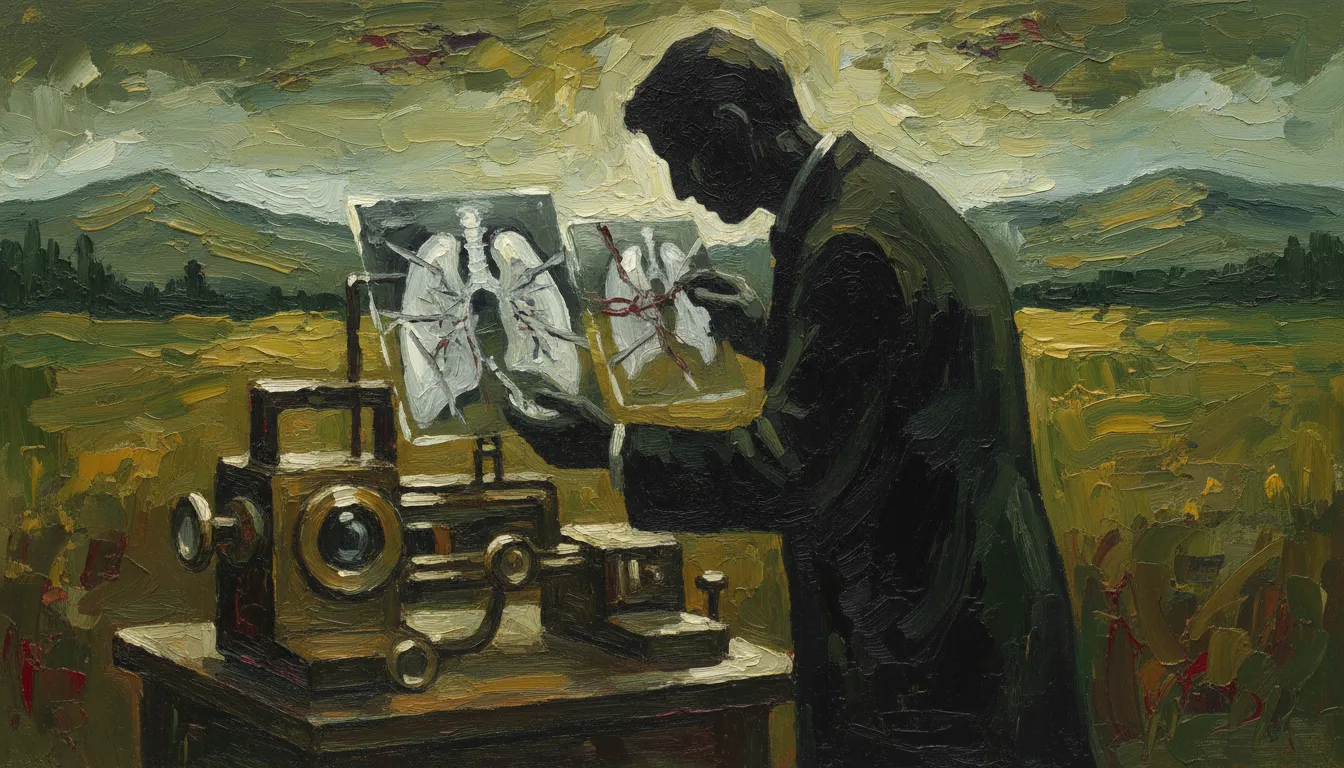
In the history of twentieth-century medicine, few figures have had such a profound impact yet remained so long in the shadows as Alan L. Hart. Physician, radiologist, researcher, and writer, Hart revolutionized the diagnosis of tuberculosis, potentially saving thousands of lives [3][4]. But there is another reason his story is extraordinary: he was one of the first transgender men in the United States to complete a medical transition, in an era when the very word “transgender” did not yet exist [1][3].
The early years: Alberta Lucille Hart
Alan L. Hart was born on October 4, 1890, in Kansas City, Kansas, with the birth name Alberta Lucille Hart [1][5]. When he was just one year old, his family moved to Oregon, where he grew up in a rural environment [5]. From childhood, Hart expressed a male gender identity, preferring clothing and activities considered typically masculine for the era [1][4].
Despite the social pressures of the period, Hart excelled in his studies. He earned a bachelor’s degree in English literature from the University of Oregon in 1912 and a master’s degree in 1913 [1][5]. But his true calling was medicine: in 1917, he graduated from the University of Oregon Medical School (now Oregon Health & Science University), becoming one of the few people assigned female at birth to earn a medical degree in that period [1][3][5].
The transition: an act of courage
In 1917-1918, immediately after graduating from medical school, Hart made a decision that would change his life forever. With the support of Dr. J. Allen Gilbert, a psychiatrist and director of Oregon’s Board of Health, Hart underwent a hysterectomy — one of the first documented gender-affirming procedures in the United States [1][3][4].
Gilbert, who had studied early European work on “sexual inversion,” understood that Hart was not dealing with a mental illness but had an authentic male gender identity [3][4]. In an era when homosexuality and gender variance were considered pathologies, this recognition was revolutionary.
After the procedure, Alberta Lucille Hart legally became Alan L. Hart, adopting a new name and beginning to live publicly as a man [1][5]. This transition was not only personal but also professional: Hart had to start his medical career over again with his true identity.
The pioneer of radiology
After his transition, Hart specialized in radiology, a relatively new medical field in the early twentieth century [3]. He worked in sanatoriums and radiological clinics across the country — New Mexico, Illinois, Washington, and Idaho — dedicating himself particularly to the fight against tuberculosis, one of the leading causes of death at the time [1][6].
Hart’s revolutionary insight was understanding that X-rays could be used not only to confirm an already suspected diagnosis, but as a preventive screening tool [3][4]. Before his pioneering work, chest X-rays were performed only when patients already showed severe symptoms of the disease. Hart demonstrated that by identifying tuberculosis in its early stages, when it was still asymptomatic, many more lives could be saved [2][4].
The impact in Idaho and Connecticut
In 1937, Hart was hired by the Idaho Tuberculosis Association and subsequently became the director of tuberculosis control for the entire state [1][6]. Here he put his theories into practice on a large scale, establishing Idaho’s first tuberculosis screening clinics, both stationary and mobile [6]. His mass screening programs made it possible to identify thousands of cases in their early stages.
In 1943, Hart published “These Mysterious Rays: A Nontechnical Discussion of the Uses of X-rays and Radium, Chiefly in Medicine” (Harper & Brothers), a text that collected his knowledge and experiences in the field of tuberculosis radiology [1][5]. The book became a standard reference in the field and remains an important document in the history of medicine.
In 1948, Hart was appointed director of hospitalization and rehabilitation for the Connecticut State Tuberculosis Commission [2]. As he had done in Idaho, he implemented a massive statewide radiographic screening program, emphasizing the importance of early diagnosis and timely treatment [2]. He held this position for the rest of his life, contributing significantly to containing the spread of tuberculosis in Connecticut.
The screening techniques developed by Hart still form the basis of modern tuberculosis diagnosis protocols [3][4]. His work literally saved thousands of lives and laid the foundations for the public health programs we know today.
The writer
Beyond medicine, Hart cultivated a lifelong passion for writing. He published four novels, all centered on medical themes and containing semi-autobiographical elements [1][5]:
- “Doctor Mallory” (1935)
- “The Undaunted” (1936)
- “In the Lives of Men” (1937)
- “Dr. Finley Sees It Through” (1940)
In particular, “The Undaunted” features a medical protagonist, Richard Cameron, who describes himself as “crippled” after the amputation of his foot following a persistent bone infection [5]. Scholars have interpreted these characters as ways through which Hart explored themes of physical and social difference, indirectly reflecting on his own experience as a transgender person.
Hart also published more than nine short stories, incorporating elements of drama, romance, and medical themes [1].
A life marked by discrimination
Despite his extraordinary contributions to medicine, Hart’s life was marked by the constant need to conceal his transgender identity [4]. Every time someone discovered his past, Hart faced discrimination that forced him to relocate and start over elsewhere [1][4].
He married twice, both times to women. His first marriage was to Inez Stark, but it ended in divorce. In 1925, he married Edna Ruddick, with whom he remained until his death [1][5]. Edna was a life partner who supported him and protected his privacy.
Hart also used the pseudonym Robert Allen Bamford Jr. during certain periods of his life, likely to escape those who sought to reveal his personal history [1]. This need to protect his identity reflects the immense difficulties that transgender people faced — and often still face — in society.
The historical rediscovery
Alan L. Hart died of heart failure on July 1, 1962, at the age of 71 [1][5]. For decades after his death, his contribution to medicine was remembered, but his transgender identity remained in the shadows. Only toward the end of the twentieth century, thanks to the work of LGBTQ+ historians, did his complete story begin to emerge [3][4].
Today, Hart is recognized not only as a pioneer of medical radiology but also as a foundational figure in transgender history. His story demonstrates that trans people have always been part of society and have contributed in extraordinary ways to human progress, despite ostracism and discrimination.
A lasting legacy
Alan L. Hart’s legacy is twofold. As a physician, his innovations in the use of X-rays for tuberculosis screening saved countless lives and laid the groundwork for modern public health programs [2][3][4]. As a transgender man, his story offers an example of courage and resilience in an era when being openly trans was nearly impossible.
Hart lived in a period when medical science was just beginning to understand gender identity. Despite this, he managed to obtain the medical support necessary for his transition and to build an extraordinary career. His life demonstrates that gender identity affirmation is not a modern phenomenon, but a human reality that has always existed.
Today, as we continue to fight for the rights of transgender people, Alan L. Hart’s story reminds us how far we still have to go, but also how much progress has been made. Hart had to hide his identity to survive professionally; today we can openly celebrate his contributions to both medicine and transgender history.
His life teaches us that gender identity and professional excellence are not in conflict — and that transgender people have always had the potential to change the world for the better, if only society would allow them to do so.
Frequently asked questions
Who was Alan L. Hart?
Alan L. Hart (1890-1962) was an American physician, radiologist, and researcher, a pioneer in the use of X-rays for the early diagnosis of tuberculosis. He was also one of the first trans men in the United States to undergo a hysterectomy as part of his gender transition.
What were Alan L. Hart's medical contributions?
Hart revolutionized the fight against tuberculosis by introducing the systematic use of chest X-rays as a preventive screening tool. Before his work, X-rays were used only after the onset of severe symptoms. His techniques saved thousands of lives.
When did Alan L. Hart transition?
Hart completed his medical transition around 1917-1918, when he underwent a hysterectomy at the University of Oregon. He was supported by Dr. J. Allen Gilbert, who understood his gender identity.
Why did Alan L. Hart have to relocate multiple times?
Every time his trans identity was discovered, Hart faced discrimination that forced him to change jobs and cities. Despite his extraordinary medical skills, he had to confront prejudice throughout his life.
Further reading
- book Transgender History (2008)